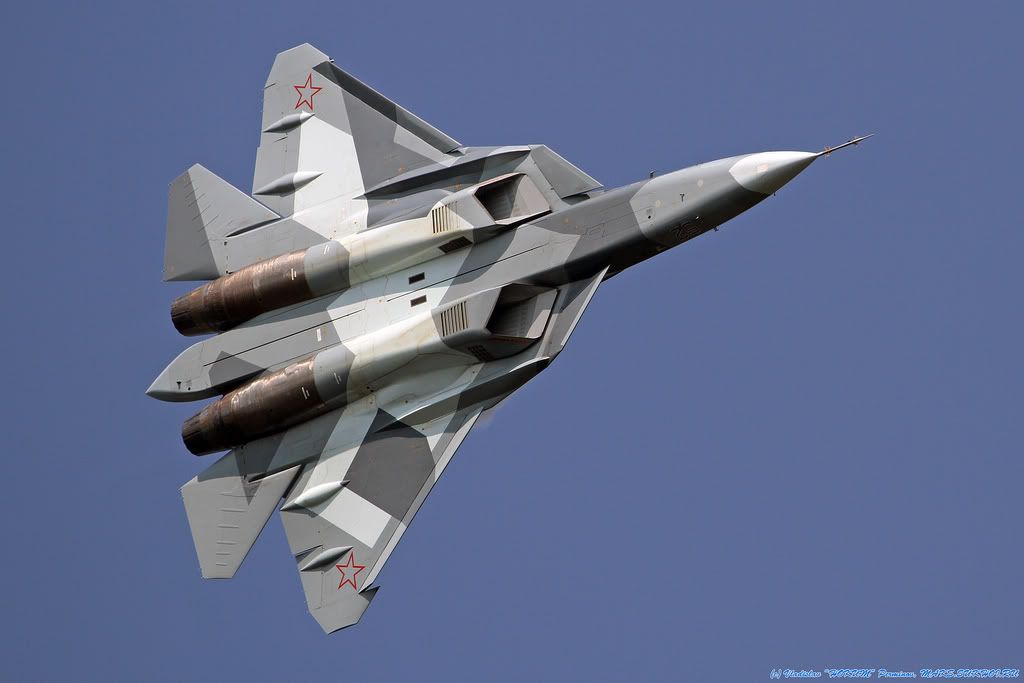
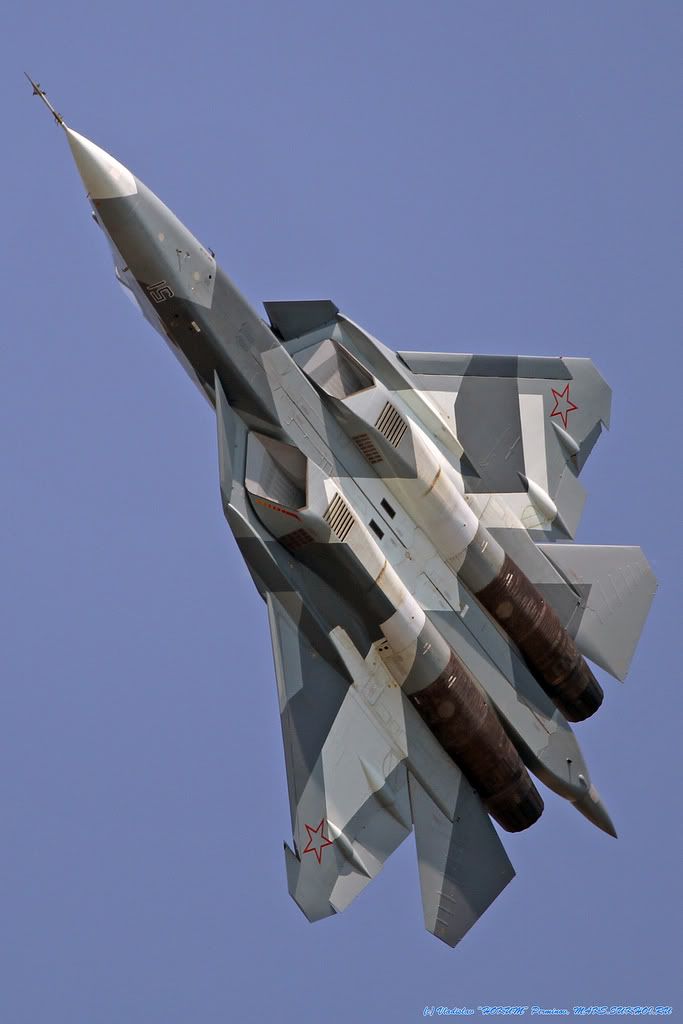
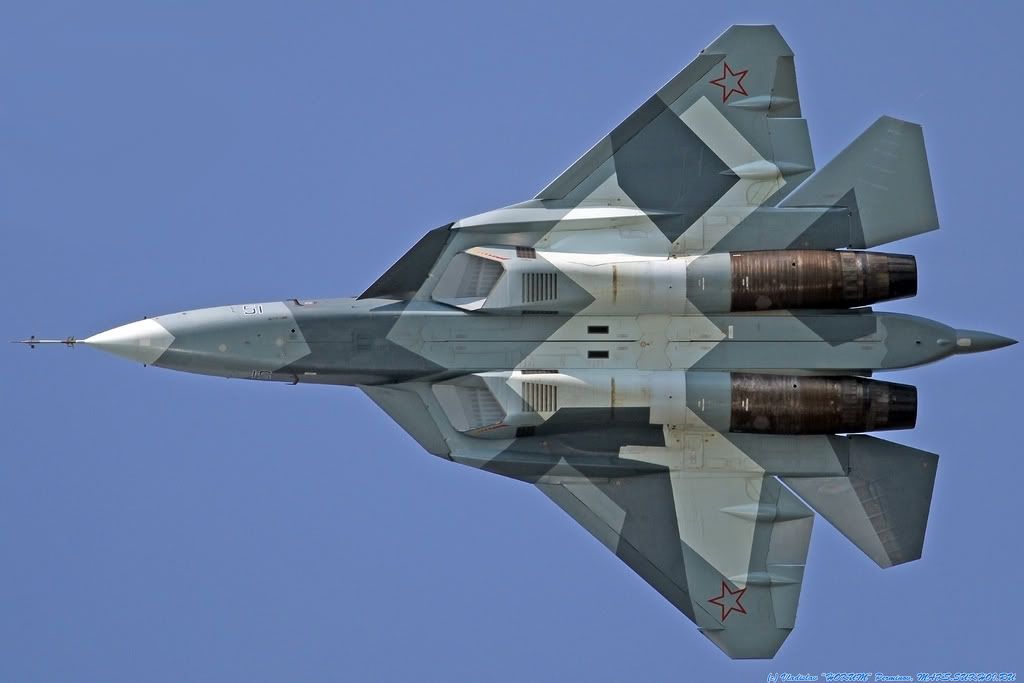
The PAK FA, when fully developed, is intended to be the successor to the MiG-29and Su-27 in the Russian inventory and serve as the basis of the Sukhoi/HAL FGFAbeing developed with India.[14][15] A fifth generation jet fighter, the T-50 performed its first flight 29 January 2010.[3][16] Its
second flight was on 6 February and its third on 12 February 2010. As
of 31 August 2010, it had made 17 flights and by mid-November, 40 in
total. The second prototype was to start its flight test by the end of
2010, but this was delayed until March 2011.[
DISCLAIMER :
Dont believe anything you read, and half of what you see, here !
If a picture doesnt have the blog address as a watermark, it means it was not edited by me. Also we intentionally photoshoped these picture in a low quality photo manipulation, because we dont want anyone to repost this as the truth.
Most of the article are not ours either. We edited it to be match our posts or simply for seo.
Use your common sense to differentiate the truth from hoax.. we sometimes mix it all in.
Dont believe anything you read, and half of what you see, here !
If a picture doesnt have the blog address as a watermark, it means it was not edited by me. Also we intentionally photoshoped these picture in a low quality photo manipulation, because we dont want anyone to repost this as the truth.
Most of the article are not ours either. We edited it to be match our posts or simply for seo.
Use your common sense to differentiate the truth from hoax.. we sometimes mix it all in.
Showing posts with label twin-engine. jet fighter. Show all posts
Thursday, February 23, 2012
Saturday, December 31, 2011
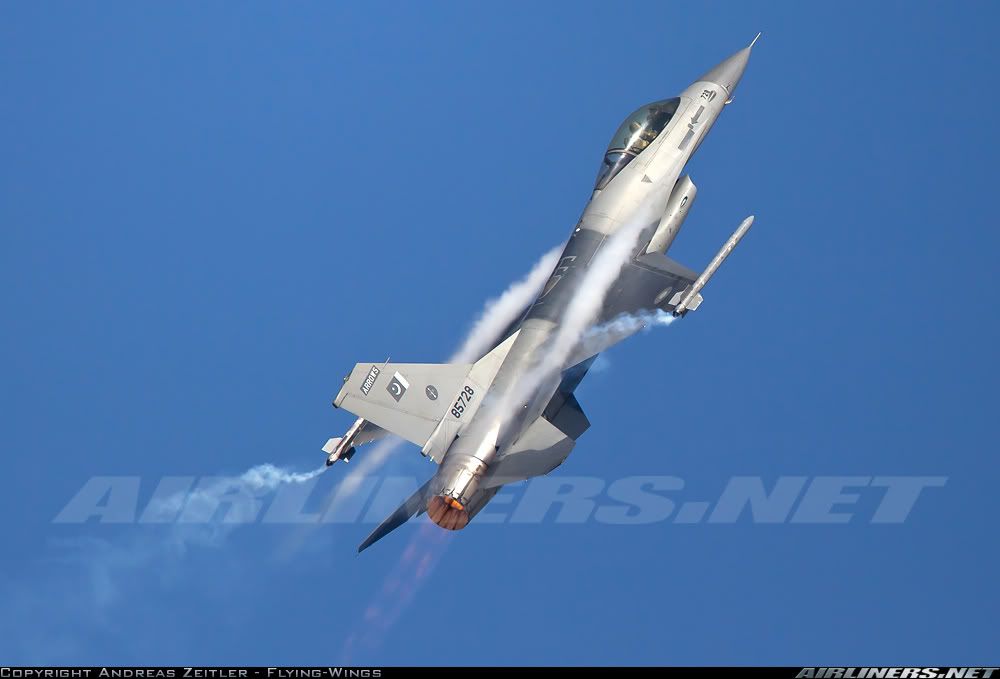
PAF F-16A clean sweep Typhoon
A special feature posted on the PAF Falcons web site provides a fascinating transcript of a one-on-one interview with an anonymous, although apparently very senior, Pakistani Air Force F-16 pilot. It reminds me of YouTube Terry's infamous indiscretions.
The Pakistani pilot manages to embarrass the pride of the Royal Air Force, candidly describe Israeli air-to-air prowess and explain how the US keeps the F-16 Block 52's secrets away from the Pakistanis and -- by extension -- the Chinese.
On the RAF Typhoon:
On one occasion - in one of the international Anatolian Eagles - PAF pilots were pitted against RAF Typhoons, a formidable aircraft. There were three set-ups and in all three, we shot down the Typhoons. The RAF pilots were shocked.
Q: Any particular reason for your success?
A: NATO pilots are not that proficient in close-in air-to-air combat. They are trained for BVR engagements and their tactics are based on BVR engagements. These were close-in air combat exercises and we had the upper hand because close-in air combat is drilled into every PAF pilot and this is something we are very good at.
On the Israelis:
Q: What are the Isrealis afraid of?
A: What they fear most is that we might learn about their tactics, especially BVR countermeasure tactics, which they have mastered.
Q: I heard a rumour that the TuAF once gave PAF pilots the opportunity to fly with and against the Israelis in A. TuAF F-16s pretending to be Turkish pilots - even letting them sit in the Turkish-Israeli ACMI de-briefs?
A: No comments.
On US concerns about the Chinese:
To recall an interesting little story: soon after the first F-16s were delivered to Pakistan in the mid-80s, the PLAAF Chief visited Sargodha. The Americans were there as well. As a gesture of courtesy, the PAF showed the PLAAF Chief one of the F-16s and let him sit in the cockpit. Some US technicians were there looking on. As soon as the PLAAF Chief sat in the F-16 cockpit, the first thing he did was to start measuring the HUD with his fingers, you know, when you extend your little finger and thumb to measure something? This worried the Americans.
On US export control practices:
They have ways of keeping an eye on the Block 52s without being personally present. The main concern is the transfer of cutting-edge technology - the avionics and radar, the Joint Helmet Mounted Cueing System (JHMCS) the Sniper pod. They have put digital seals all the sensitive technologies, which can only be opened via a code, which only they know. If there is a malfunction or these parts need to be serviced, they will be taken out of the Block 52s and shipped back to the US for repairs/servicing. If we try to pry open these systems without the codes, inbuilt alarms will be relayed to the Americans, which will be a breach of the contract.
Q: Will the Americans be able to track the locations of the Block 52s through some sort of tracking devices hidden inside the aircraft?
A: If there are tracking devices then they will be inside the sealed systems, like the avionics suites or the sniper pods because we will not have the ability to look inside. If their Predator and Reaper drones are transmitting their GPS locations via satellite so can a Block 52 F-16.
Even though Turkey produces the F-16, there are some components that are manufactured in the US and only come to Turkey for the final assembly. In one incident, a Turkish Block 50 crashed and the pilot was killed. They salvaged the wreckage and laid it out in hanger and started putting together the pieces to find out the cause. They found a piece of sealed equipment which had cracked open and inside they found some device that looked like a bug. Upon inquiry, it turned out to be a tracking device.
The Pakistani pilot manages to embarrass the pride of the Royal Air Force, candidly describe Israeli air-to-air prowess and explain how the US keeps the F-16 Block 52's secrets away from the Pakistanis and -- by extension -- the Chinese.
On the RAF Typhoon:
On one occasion - in one of the international Anatolian Eagles - PAF pilots were pitted against RAF Typhoons, a formidable aircraft. There were three set-ups and in all three, we shot down the Typhoons. The RAF pilots were shocked.
Q: Any particular reason for your success?
A: NATO pilots are not that proficient in close-in air-to-air combat. They are trained for BVR engagements and their tactics are based on BVR engagements. These were close-in air combat exercises and we had the upper hand because close-in air combat is drilled into every PAF pilot and this is something we are very good at.
On the Israelis:
Q: What are the Isrealis afraid of?
A: What they fear most is that we might learn about their tactics, especially BVR countermeasure tactics, which they have mastered.
Q: I heard a rumour that the TuAF once gave PAF pilots the opportunity to fly with and against the Israelis in A. TuAF F-16s pretending to be Turkish pilots - even letting them sit in the Turkish-Israeli ACMI de-briefs?
A: No comments.
On US concerns about the Chinese:
To recall an interesting little story: soon after the first F-16s were delivered to Pakistan in the mid-80s, the PLAAF Chief visited Sargodha. The Americans were there as well. As a gesture of courtesy, the PAF showed the PLAAF Chief one of the F-16s and let him sit in the cockpit. Some US technicians were there looking on. As soon as the PLAAF Chief sat in the F-16 cockpit, the first thing he did was to start measuring the HUD with his fingers, you know, when you extend your little finger and thumb to measure something? This worried the Americans.
On US export control practices:
They have ways of keeping an eye on the Block 52s without being personally present. The main concern is the transfer of cutting-edge technology - the avionics and radar, the Joint Helmet Mounted Cueing System (JHMCS) the Sniper pod. They have put digital seals all the sensitive technologies, which can only be opened via a code, which only they know. If there is a malfunction or these parts need to be serviced, they will be taken out of the Block 52s and shipped back to the US for repairs/servicing. If we try to pry open these systems without the codes, inbuilt alarms will be relayed to the Americans, which will be a breach of the contract.
Q: Will the Americans be able to track the locations of the Block 52s through some sort of tracking devices hidden inside the aircraft?
A: If there are tracking devices then they will be inside the sealed systems, like the avionics suites or the sniper pods because we will not have the ability to look inside. If their Predator and Reaper drones are transmitting their GPS locations via satellite so can a Block 52 F-16.
Even though Turkey produces the F-16, there are some components that are manufactured in the US and only come to Turkey for the final assembly. In one incident, a Turkish Block 50 crashed and the pilot was killed. They salvaged the wreckage and laid it out in hanger and started putting together the pieces to find out the cause. They found a piece of sealed equipment which had cracked open and inside they found some device that looked like a bug. Upon inquiry, it turned out to be a tracking device.
Pak-Fa Impact on future USAF
In the Cold War, you could rely on the Pentagon and the USAF to play up the Soviet threat for all it was worth. The MiG-25? Not only Mach 3 but an agile dogfighter. The Tu-22M Backfire was a B-1 equivalent with the range for strategic attacks against the US. And if you disagreed with the USAF that the nation consequently needed lots of F-15s and B-1s, you were clearly some kind of fluoride-swilling crypto-Commie prevert.
There was actually a running fight between the military intelligence agencies and the CIA, which bypassed the Pentagon and took its data to black-program teams within industry. The most public rumpus was over Backfire, where the boss of USAF intelligence tried to force McDonnell Douglas to recant the conclusions of a CIA-contracted team within the company, whose estimates of the bomber's performance were lower and far more accurate than those of Air Force analysts and the Defense Intelligence Agency.
So it's ironic to see USAF leaders downplaying the potential of the T-50,as in this report from Air Force Times. “I didn’t see anything … that would cause me to rethink plans for the F-22 or F-35,” Air Force Secretary Michael Donley was quoted as saying. Pacific Air Forces commander Gen. Gary North, added: “I guess the greatest flattery is how much they copy you.”
Donley's comment, of course, is a demonstration of the Mandy Rice-Davies principle in action: He would say that, wouldn't he? His immediate predecessor was canned for (among other things) expressing incorrect and counter-revolutionary sentiments regarding his boss's F-22/F-35 plan.
Gen. North, meanwhile, is falling into the old technical intelligence trap called mirror-imaging: we want the B-1, so the Soviets must want a B-1 as well. The PAK-FA's front end bears a superficial resemblance to the F-22, but its hindquarters could not be more different, and - just for starters - it's a reasonable assessment that the Russian concept of balancing stealth with other requirements is very different from that which informed the F-22 design.
I'm not sure that anyone has an accurate assessment of the PAK-FA threat, in terms of timing, numbers and detailed capability - that will depend on how fast the Russia-India relationship can move things forward, which in turn depends on money, as well as on technical resources. But it is pretty clearly a supercruiser, probably a good one, with some unique features that are there to combine speed and high agility without counter-stealthy aerodynamic surfaces all over the place.
And had you started thinking about this kind of design in the late 1990s, and if "eating F-35s for breakfast" was on the requirements list, you'd end up with something like T-50. So I'd suggest that writing it off as a me-too F-22 is a bit premature.
By Bill Sweetman
Labels:
airforce,
American,
F-22,
F-35,
Russia,
Russian Air Force,
Sukhoi,
Sukhoi OKB,
T-50,
T50,
twin-engine. jet fighter,
USAF,
USNAF
Friday, December 30, 2011
Pak-Fa Stealth Fighter Gallery 1
The Sukhoi PAK FA (Russian: Перспективный авиационный комплекс фронтовой авиации, Perspektivny aviatsionny kompleks frontovoy aviatsii, literally "Prospective Airborne Complex of Frontline Aviation") is a twin-engine jet fighter being developed by Sukhoi OKB for the Russian Air Force. The Sukhoi T-50 is the prototype for PAK FA.[12] The PAK FA is one of only a handful of stealth jet programs globally.[13]
The PAK FA, when fully developed, is intended to be the successor to the MiG-29and Su-27 in the Russian inventory and serve as the basis of the Sukhoi/HAL FGFAbeing developed with India.[14][15] A fifth generation jet fighter, the T-50 performed its first flight 29 January 2010.[3][16] Its second flight was on 6 February and its third on 12 February 2010. As of 31 August 2010, it had made 17 flights and by mid-November, 40 in total. The second prototype was to start its flight test by the end of 2010, but this was delayed until March 2011.[17][18][19][20][21]
Sukhoi director Mikhail Pogosyan has projected a market for 1,000 aircraft over the next four decades, which will be produced in a joint venture with India, 200 each for Russia and India and 600 for other countries.[22] He has also said that the Indian contribution would be in the form of joint work under the current agreement rather than as a joint venture.[23] The Indian Air Force will "acquire 50 single-seater fighters of the Russian version" before the two seat FGFA is developed.[24] The Russian Defense Ministry will purchase the first 10 aircraft after 2012 and then 60 after 2016.[25][26] The first batch of fighters will be delivered with current technology engines.[27] Ruslan Pukhov, director of the Centre for Analysis of Strategies and Technologies, has projected that Vietnam will be the second export customer for the fighter.[28] The PAK-FA is expected to have a service life of about 30–35 years.
Subscribe to:
Comments (Atom)