DISCLAIMER :
Dont believe anything you read, and half of what you see, here !
If a picture doesnt have the blog address as a watermark, it means it was not edited by me. Also we intentionally photoshoped these picture in a low quality photo manipulation, because we dont want anyone to repost this as the truth.
Most of the article are not ours either. We edited it to be match our posts or simply for seo.
Use your common sense to differentiate the truth from hoax.. we sometimes mix it all in.
Dont believe anything you read, and half of what you see, here !
If a picture doesnt have the blog address as a watermark, it means it was not edited by me. Also we intentionally photoshoped these picture in a low quality photo manipulation, because we dont want anyone to repost this as the truth.
Most of the article are not ours either. We edited it to be match our posts or simply for seo.
Use your common sense to differentiate the truth from hoax.. we sometimes mix it all in.
Showing posts with label F-35. Show all posts
Friday, January 17, 2014
Wednesday, November 20, 2013
Turkey Gets It, Acquires F-35s. Obama Administration Doesn't.
The Turkish government understands what the Obama Administration does not: Acquiring the American-made F-35 fighter jet is the most effective way to claim supremacy of the skies.
Yesterday, Turkey’s Defense Industry Implementation Committee announced the purchase of two Lockheed Martin F-35s. Turkey had put its F-35 order on hold in March over concerns of technology sharing and cost. However, the recent announcement suggests that Turkey is preparing itself for the increasing challenges that its neighborhood poses.
It’s unfortunate that the Obama Administration has failed to register the message. In addition to canceling production of the F-22, a stealth fighter jet built to ensure U.S. supremacy over any battlefield, the Administration has reduced production of the F-35, which American taxpayers have invested $50 billion in. As the first aircraft in history with a 360-degree view and the ability to see over 800 miles with integrated combat systems, the F-35 is a marvel of modern engineering.
In a time of austerity, critics of F-35 production argue that the jet is too expensive. Yet what they disregard is that the cost of plane decreases as production and sale of jets to allies increases. As part of the international F-35 consortium, British Defense Minister Phillip Hammond expressed concern over the cuts to the program yesterday, citing the likelihood that costs of the jet will increase if there is reduced production.
Rather than limiting production of the F-35 and cancelling its brother, the F-22, the Obama Administration should invest in the potential these jets offer to U.S. air capabilities and to our allies. Gutting the defense budget makes Americans and our allies less safe. A first step to remedying this is to take the F-22 and F-35 off the chopping block.
Original post by :
Saturday, June 9, 2012
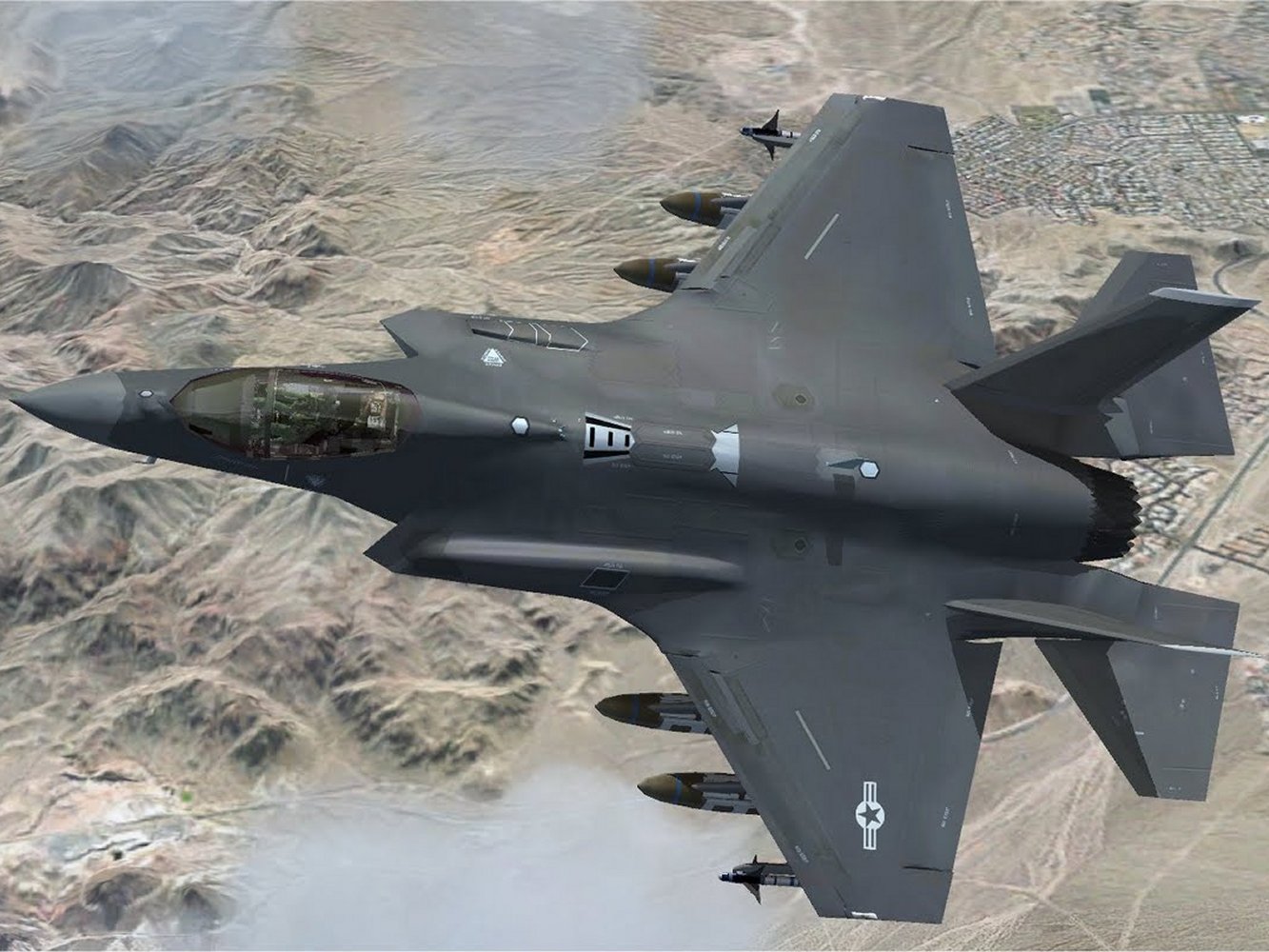
F-35 Joint Strike Fighter For TuAF Turkey [HD] wallpaper
The Joint Strike Fighter, which is being built by Lockheed
Martin as the F35 Lightning II, will replace the TuAF F-16 falcons and vintage F-4 Phantoms from
2016. Although Lockheed Martin is the prime contractor, the TAI is a
Level 3 partner with the US and a number of British companies, including
BAE Systems and Rolls-Royce, will have extensive involvement in
building and developing the aircraft.
Turkey receives its first F-35 Lightening II
![]() |
| A historic flight. Turk Hava Kuvvetleri replaces its F-4 with its brand new F-35 5th gen fighter . |
The conventional takeoff and landing (CTOL) aircraft, made its debut flight on June 01, 2016 , Lockheed Martin announced Monday.
A series of functional flight checks were conducted during the flight that lasted for 45 minutes.
The jet will undergo a series of flight trials before being handed over to the Turkish Airforce which will then use the 5th Generation fighter for training and operational tests at the Konya Air Force Base, beginning later this year, Lockheed said.
While a final decision on the total number of F-35s it will acquire is still pending, the Turkish Government is now reconsidering its decision to buy the F-35C carrier variants of the jets and may switch back to ordering the F-35A CTOL variants as decided originally.
These aircrafts will replace the F-4 phantom bought from theUS in the 70s and 80s .
Friday, June 8, 2012
F-35 Lightening II for Japan JASDF
![]() |
| The Modern Japanese Ninja over Mount Fuji. |
The Modern Japanese Ninja over Mount Fuji.
WASHINGTON (Jiji Press)--The U.S. Defense Department has notified Congress of its estimate that the planned acquisition of 42 state-of-the-art F-35 stealth fighters by Japan's Air Self-Defense Force will cost a total of 10 billion dollars.
This is the first time that the overall estimated price for the sale to Japan of F-35 jets, built by Lockheed Martin Corp., has been revealed.
The revelation will likely add to controversy in Japan over the introduction of the fighters at a time when delays in their development have raised worries about deferred deliveries and a rise in prices.
According to the notice to Congress by the Pentagon's Defense Security Cooperation Agency, as of Monday, the total estimated cost includes the F-35 aircraft bodies, satellite-based electronic warfare systems, spare and repair parts, and personnel training expenses.
The bureau said Japan is "a key ally of the United States in ensuring the peace and stability of this region." It also said the proposed sale of the aircraft and support "will not alter the basic military balance in the region."
Last December, the government selected the F-35, jointly developed by nine countries including the United States and Britain, as the nation's next-generation fighter to replace the aging fleet of F-4 fighters. It plans to deploy 42 F-35 fighters and set aside outlays for the first four units in the fiscal 2012 budget.
Under the budget, Japan earmarked about 8.9 billion yen per F-35 aircraft body. By contrast, the U.S. estimate means a unit price of 238 million dollars, or about 19.1 billion yen at current exchange rates, more than double the Japanese calculation, though the U.S. figure also includes ancillary equipment and training expenses.
The Defense Ministry intends to choose the F-35 fighter jet, jointly being developed by the United States, Britain, Australia and six other countries, as the next frontline fighter plane in the Air Self-Defense Force's arsenal, it has been learned.
The ministry will officially name the advanced F-35 as a successor to the ASDF's current F-4 fighter jet Friday at a meeting of the Security Council of Japan led by Prime Minister Yoshihiko Noda.In the budgetary request for fiscal 2012, the ministry has posted 55.1 billion yen as procurement expenses for four F-35 jets. The ministry eventually plans to deploy about 40 jets in the future.
Japan has not participated in the joint development project, which is being led by U.S. defense contractor Lockheed Martin Corp.
In the process to choose its next-generation fighter jet, the ministry and ASDF were drawn to the F-35's technologies that include the latest stealth capability that enables it to more efficiently evade radar detection, as well as its ability to inform F-35 pilots about key information gathered from various sources including ground radars and Aegis-equipped vessels.
Though Japan is not a participating nation in the F-35 project, the U.S. government has stated it disclosed some classified information about the jet's body to its Japanese counterpart. This means Japan's companies will be involved in the F-35's manufacturing process. The Defense Ministry believes the introduction of the jet will help the country to maintain an understanding of the F-35's basic technology.
There is concern that the first of the jets might not be available during the ministry-set deadline of fiscal 2016 due to development delays caused by a U.S. defense spending cut.
Despite this, it is said that the U.S. government has promised that the jets will be delivered to Japan during fiscal 2016.
This is the first time in about 30 years that the Defense Ministry will choose a next-generation fighter jet. The ministry has been evaluating the F-35 against two other candidates--the F/A-18E/F, which is mainly manufactured by U.S. firm Boeing Co., and the Eurofighter, jointly developed by four European nations headed by Britain's BAE Systems PLC.
The Defense Ministry and the ASDF graded the three jets using a 100-point scale on four aspects: performance, related expenses, influence on domestic industries, and ease of maintenance and repair.
Saturday, May 5, 2012
F-22 vs F-35
The F-22 and F-35,
the newest planes in the US military's arsenal. Both are similar in
appearances and capabilities. Both are the product of multi-billion
dollar projects and both cost millions dollars. However, which is the
better plane?
Comparison...
| | ||
|
Yes (Mach 1.8)
|
No
| |
|
V/STOL (takeoff vertically)
|
No
|
Yes (One version)
|
|
Stealth
|
Better
|
Not as good
|
|
Top Speed
|
Mach 2.25
|
Mach 1.6
|
|
Service ceiling
|
65 000 ft.
|
60 000 ft.
|
|
Engines
|
Double
|
Single
|
|
Size
|
Large
|
Small
|
|
Maneuverability
|
Better
|
Not as good
|
|
Operate on Carriers?
|
No
|
Yes
|
|
Cost
|
US $150 million
|
US $96 million
|
|
Maintenance
|
More
|
Less
|
|
Payload
|
Larger
|
Smaller
|
|
Vectored thrusting
|
Yes (more maneuverable)
|
No
|
|
Avionics (equipment like radar)
|
Better
|
Not as good
|
Friday, May 4, 2012
Red Arrows F-35 low altitude high speed pass
British Royal Airforce Red Arrows F-35 approaching the speed of sound on a low-level pass over a lake. . Incredible sound.
Background photo of half frozen Finnish lake: Bettina Hutz.
Red arrows JSF by Me: Mil Psd
Japan goes shopping for the troubled JSF
The Defense Security Cooperation Agency notified Congress April 30 of a
possible Foreign Military Sale to the Government of Japan for a possible
sale of an initial four F-35 Joint Strike Fighter Conventional Take-Off
and Landing (CTOL) aircraft with an option to purchase an additional 38
F-35 CTOL aircraft.
The estimated cost is $10 billion.
All aircraft will be configured with the Pratt and Whitney F-135 engines, and 5 spare Pratt and Whitney F-135 engines.
Other Aircraft Equipment includes: Electronic Warfare Systems, Command,
Control, Communication, Computers and Intelligence/Communication,
Navigational and Identifications (C4I/CNI), Autonomic Logistics Global
Support System (ALGS), Autonomic Logistics Information System (ALIS),
Flight Mission Trainer, Weapons Employment Capability, and other
Subsystems, Features, and Capabilities, F-35 unique infrared flares,
reprogramming center, and F-35 Performance Based Logistics. Also
included: software development/integration, flight test instrumentation,
aircraft ferry and tanker support, spare and repair parts, support
equipment, tools and test equipment, technical data and publications,
personnel training and training equipment, U.S. Government and
contractor engineering, technical, and logistics support services, and
other related elements of logistics support. The estimated cost is $10
billion.
Japan is one of the major political and economic powers in East Asia and
the Western Pacific and a key ally of the United States in ensuring the
peace and stability of this region. The U.S. Government shares bases
and facilities in Japan. This proposed sale is consistent with these
U.S. objectives and with the 1960 Treaty of Mutual Cooperation and
Security.
The proposed sale of aircraft and support will augment Japan’s
operational aircraft inventory and enhance its air-to-air and
air-to-ground self-defense capability. The Japan Air Self-Defense
Force’s F-4 aircraft will be decommissioned as F-35’s are added to the
inventory. Japan will have no difficulty absorbing these aircraft into
its armed forces.
The proposed sale of this equipment and support will not alter the basic military balance in the region.
The prime contractors will be Lockheed Martin Aeronautics Company in
Fort Worth, Texas, and Pratt and Whitney Military Engines in East
Hartford, Connecticut. There are no known offset agreements proposed in
connection with this potential sale.
Implementation of this proposed sale will require multiple trips to
Japan involving U.S. Government and contractor representatives for
technical reviews/support, programs management, and training over a
period of 15 years.
U.S. contractor representatives will be required in Japan to conduct
Contractor Engineering Technical Services (CETS) and Autonomic Logistics
and Global Support (ALGS) for after-aircraft delivery.
There will be no adverse impact on the U.S. defense readiness as a result of this proposed sale.
This notice of a potential sale is required by law and does not mean the sale has been concluded.
Friday, April 27, 2012
Dutch demo team F-35 performs during Air force Days RNLAF´ 2017
![]() |
| Dutch demo team F-35 performs during Air force Days RNLAF´ 2017 |
Friday the 16th of September marked the kickoff of the ´Air force Days RNLAF´ 2017, the teams show at home base Leeuwarden. Despite the late date in the season the weather was quite nice and a lot of people showed up. In the afternoon after the Apache finished his demo, Hitec took off together with the Dutch hawker hunter.Even though the weather forecast for Saturday was not very good, a lot of people visited Leeuwarden airbase. Fortunately the weather turned out better than expected so another day of great air shows could be enjoyed by everyone.
The Royal Netherlands Air Force F-35 Next Gen Demo Team Wallpaper 1024 x 768
![]() |
| Wallpaper size : 1024 x 768 |
The Royal Netherlands Air Force F-35 Demo Team 2017-2018 is based at Volkel Airbase, The Netherlands.
The home base of the RNLAF F-35 Demo Team shifts between Volkel and Leeuwarden Airbase every two years. Early 2017, the Leeuwarden team handed over their responsibility to Volkel Airbase for showcasing the RNLAF F-35 Demo Team.
The RNLAF F-35 Demo Team 2017-2018 is comprised of personnel from the 312 and 313 Squadron, both of which are based at Volkel Airbase. The team consists of one display pilot, one display coach, six technical specialists, a team advisor and a webmaster. Captain Stefan "Stitch" Hutten will fly his first season as the display pilot for the RNLAF F-35 Demo Team.
F-35 Joint Strike Fighter Takes On Thunderbirds Stripes
Though we’re likely a decade from seeing the F-35 Joint Strike Fighter in action, much less in the Air Force's elite Thunderbirds squad, that hasn’t stopped Lockheed Martin from releasing these images of the military’s new fighter jet in full Thunderbirds dress.
The multimedia team at Lockheed’s aeronautics division released the photos in a somewhat odd effort to virally market a $100 million fighter jet. The F-35, developed by Lockheed along with Northrop Grumman and BAE Systems, is still under development, though the Pentagon has ordered 2,400 of the all-purpose aircraft for delivery over the next two decades.
As for the Thunderbirds stripes, it looks like the F-35 may be the next fighter jet to don the colors, replacing the F-16C/D Block 52s currently in service. While the military has 187 formerly-next-gen F-22 Raptors built or on order, it looks like the F-35 is going to leapfrog its Cold War-era counterpart completely. The Senate voted today to drop funding for seven additional F-22s, and when a military program dies, it’s generally not easy to resurrect.
Thursday, April 19, 2012
F-35 Joint Strike Fighter For RAF UK
![]() |
| F-35 Joint Strike Fighter with CFT's to improve range. |
The Joint Strike Fighter, which is being built by Lockheed Martin as the F35 Lightning II, will be known in UK service as the Joint Combat Aircraft (JCA) and will replace the RAF and RN’s Harriers from 2012. Although Lockheed Martin is the prime contractor, the UK is a Level 1 partner with the US and a number of British companies, including BAE Systems and Rolls-Royce, will have extensive involvement in building and developing the aircraft.
The UK version will be a multirole fighter/attack aircraft designed to operate as a STOVL aircraft from land bases and from the next generation of aircraft carriers being built for the RN. This will give the UK a world-beating land-based and sea-based joint expeditionary air power capability well into the middle of the Century. When the JCA enters service, it will be able to operate in all weathers, by day and by night, for defence of the fleet and for the offensive air support of ground forces. This support will range from close air support to long-range interdiction, as well as anti-surface warfare and tactical reconnaissance. The aircraft will offer several advantages over the Harrier: supersonic flight, improved survivability, internal and external weapons carriage, an increased range and easier supply and maintenance.
![]() | |
| External weapons carriage by F-35 Joint Strike Fighter. |
The JCA design applies stealth technology techniques and, to minimise its radar signature, the airframe has identical sweep angles for the leading and trailing edges of the wing and tail, and incorporates sloping sides for the fuselage and the canopy. As a further signature reduction measure, the seam of the canopy and the weapon-bay doors are saw-toothed and the vertical tails are canted at an angle. To achieve the smallest signature possible the aircraft will have the ability to carry a range
of weapons internally, rather than carried underneath the aircraft as in current fighters.
The main radar system will be a newly developed, electronically scanned array multi-function radar with synthetic aperture capabilities. Targeting information will be supplied by an electro-optical system, which will provide long-range detection and precision targeting by employing thermal imaging, laser tracking and marking, and a forward-looking Infrared system. The aircraft’s systems will also provide navigation, missile warning and Infrared search and track capability.
Saturday, December 31, 2011
Pak-Fa Impact on future USAF
In the Cold War, you could rely on the Pentagon and the USAF to play up the Soviet threat for all it was worth. The MiG-25? Not only Mach 3 but an agile dogfighter. The Tu-22M Backfire was a B-1 equivalent with the range for strategic attacks against the US. And if you disagreed with the USAF that the nation consequently needed lots of F-15s and B-1s, you were clearly some kind of fluoride-swilling crypto-Commie prevert.
There was actually a running fight between the military intelligence agencies and the CIA, which bypassed the Pentagon and took its data to black-program teams within industry. The most public rumpus was over Backfire, where the boss of USAF intelligence tried to force McDonnell Douglas to recant the conclusions of a CIA-contracted team within the company, whose estimates of the bomber's performance were lower and far more accurate than those of Air Force analysts and the Defense Intelligence Agency.
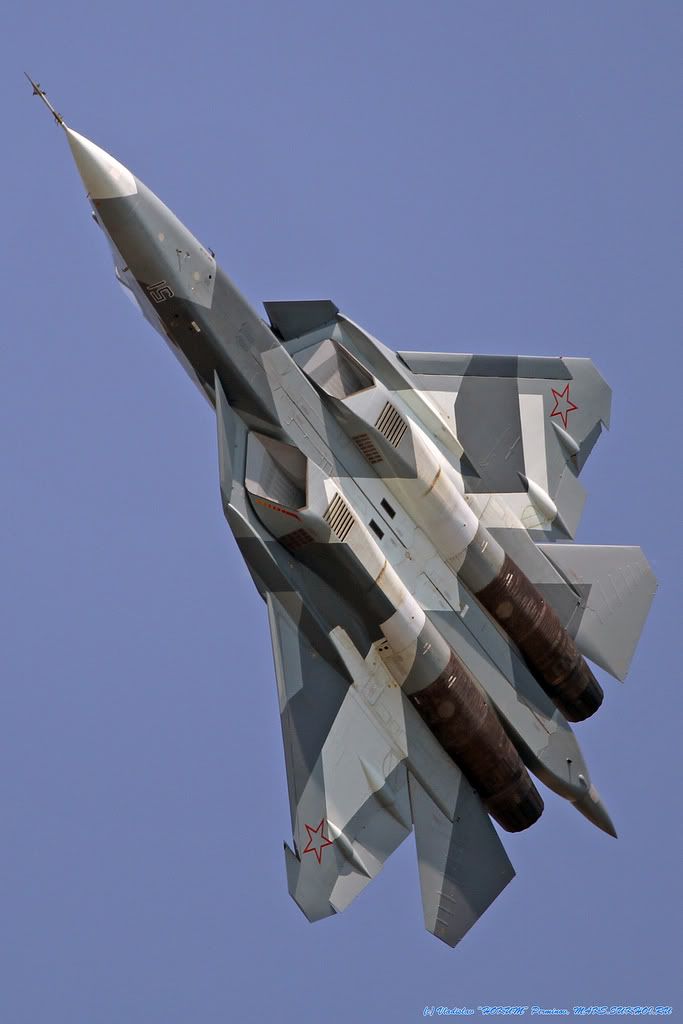
So it's ironic to see USAF leaders downplaying the potential of the T-50,as in this report from Air Force Times. “I didn’t see anything … that would cause me to rethink plans for the F-22 or F-35,” Air Force Secretary Michael Donley was quoted as saying. Pacific Air Forces commander Gen. Gary North, added: “I guess the greatest flattery is how much they copy you.”
Donley's comment, of course, is a demonstration of the Mandy Rice-Davies principle in action: He would say that, wouldn't he? His immediate predecessor was canned for (among other things) expressing incorrect and counter-revolutionary sentiments regarding his boss's F-22/F-35 plan.
Gen. North, meanwhile, is falling into the old technical intelligence trap called mirror-imaging: we want the B-1, so the Soviets must want a B-1 as well. The PAK-FA's front end bears a superficial resemblance to the F-22, but its hindquarters could not be more different, and - just for starters - it's a reasonable assessment that the Russian concept of balancing stealth with other requirements is very different from that which informed the F-22 design.
I'm not sure that anyone has an accurate assessment of the PAK-FA threat, in terms of timing, numbers and detailed capability - that will depend on how fast the Russia-India relationship can move things forward, which in turn depends on money, as well as on technical resources. But it is pretty clearly a supercruiser, probably a good one, with some unique features that are there to combine speed and high agility without counter-stealthy aerodynamic surfaces all over the place.
And had you started thinking about this kind of design in the late 1990s, and if "eating F-35s for breakfast" was on the requirements list, you'd end up with something like T-50. So I'd suggest that writing it off as a me-too F-22 is a bit premature.
By Bill Sweetman
Labels:
airforce,
American,
F-22,
F-35,
Russia,
Russian Air Force,
Sukhoi,
Sukhoi OKB,
T-50,
T50,
twin-engine. jet fighter,
USAF,
USNAF
Subscribe to:
Comments (Atom)