DISCLAIMER :

Dont believe anything you read, and half of what you see, here !


If a picture doesnt have the blog address as a watermark, it means it was not edited by me. Also we intentionally photoshoped these picture in a low quality photo manipulation, because we dont want anyone to repost this as the truth.

Most of the article are not ours either. We edited it to be match our posts or simply for seo.

Use your common sense to differentiate the truth from hoax.. we sometimes mix it all in.
Showing posts with label JF-17 block 2. Show all posts

Wednesday, February 12, 2014

Jf-17 Shooting a Bandit

Made this one quite a long time back, but didnt post it then, as i wanted to experiment different things . I need much to learn to make a believable air to air shooting scenario. But as of yet , this is it . Ill post more of the same soon .

Shown here a Pakistan Airforce Jf-17 on Combat air Patrol , over fictional Lahore, shooting down an intruder, the Indian Airforce Light Combat Aircraft . 

Tuesday, February 11, 2014

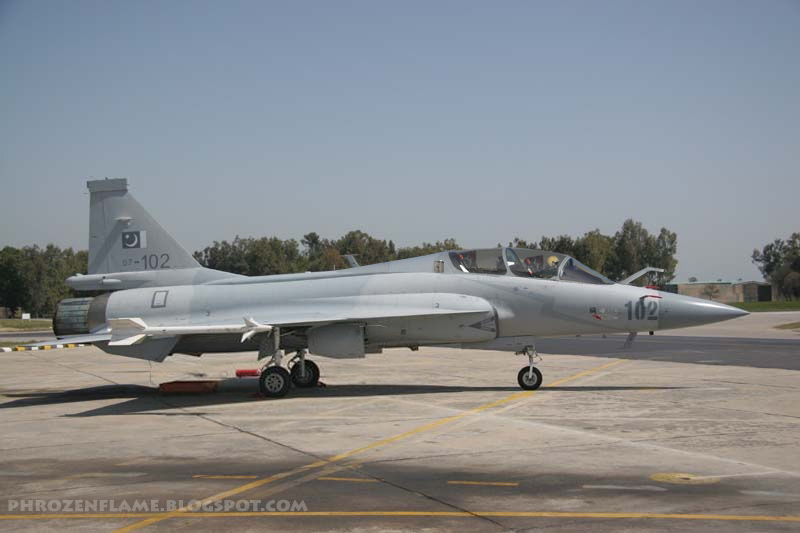
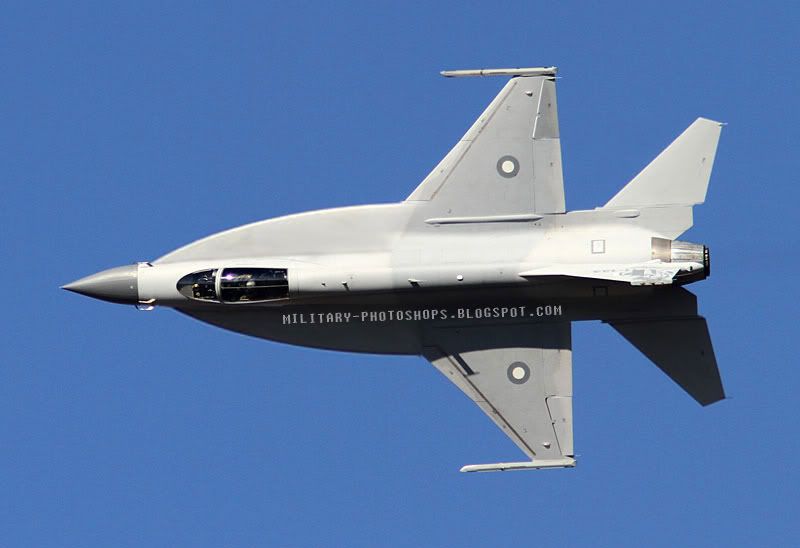
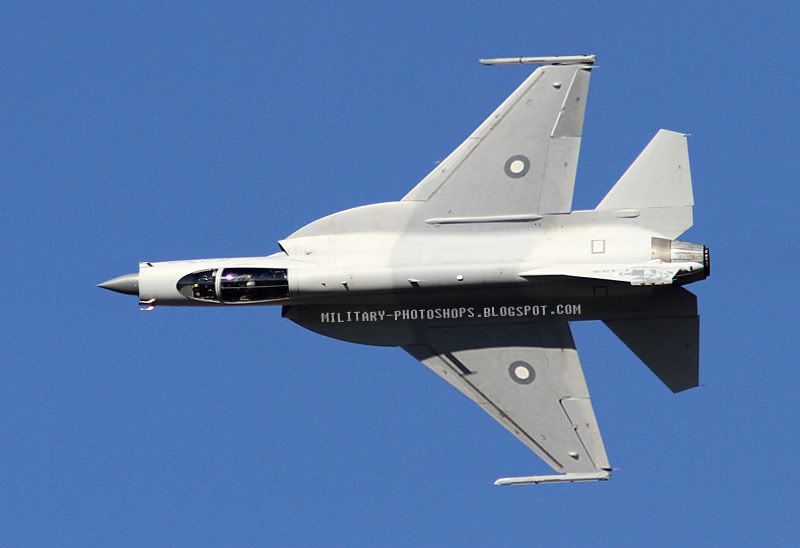
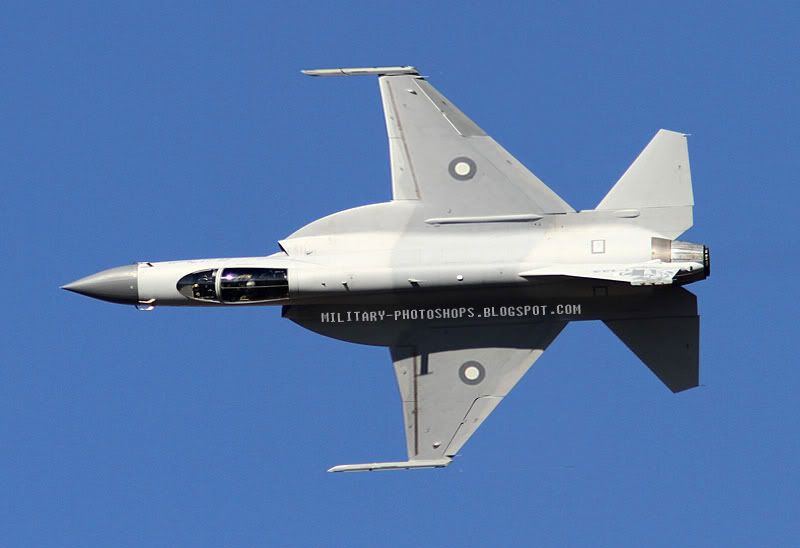
Jf-17 Block 2 new Pics


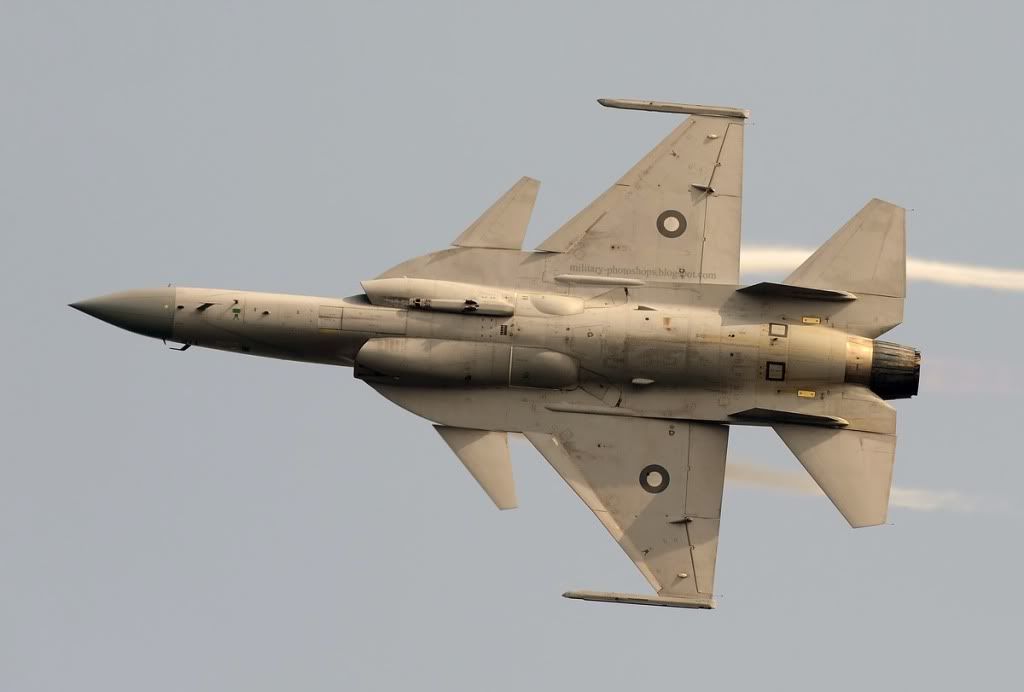
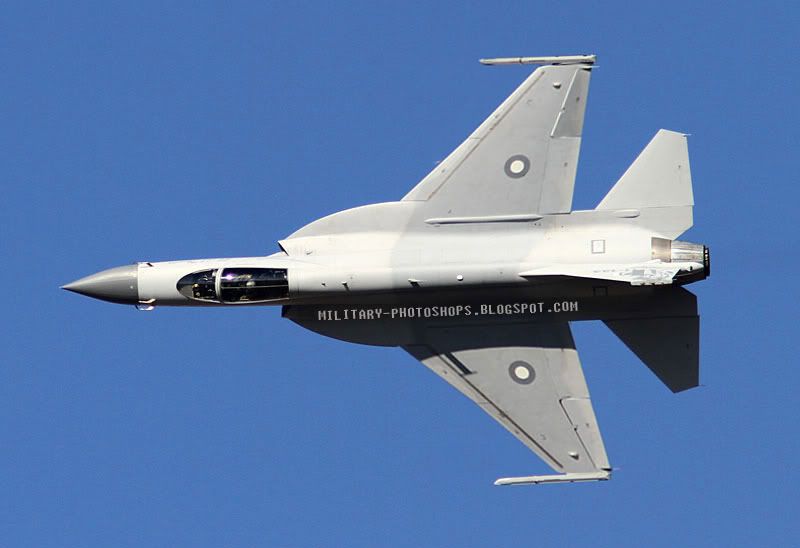
Just wanted to share these pics , i did a month back and have been lying in my hard drive since . 

Sunday, December 1, 2013

Pakistan Airforce and Egyptian Airforce Jf-17 Block 2 Joint Exercise over Pyramids


Fictional Joint Aerial Exercise between Pakistan Airforce and Egyptian Airforce Jf-17 Block 2  over the Egyptian Pyramids of Giza . The Egyptian Jf17 , i ve drawn here in EAF's high visibility camo, their early F-16 A wear . Could have used the recent one , but this looks cooler . Though its similarity to a target drone like USAF QF-4 Phantom jets is also startling .

Why Egypt use such high visibility camo for its fighter jets ?

PAF No. 27 Squadron Zarrars to be equipped with JF-17 Block II Thunders

Palistan Airforce No. 27 Squadron, nicknamed Zarrars, is a Pakistan Air Force (PAF) squadron tasked with the role of tactical attack. It is assigned to the No. 34 Tactical Attack Wing stationed at PAF Base Rafiqui (Shorkot), which is under the PAF's Central Air Command.

This is the 3rd squadron to receive CAC/PAC JF-17 Thunder aircraft, jointly developed by Pakistan and China. These Block II JF-17 have a new Multi-mode Radar with improved A2G modes including SAR, Terrain following Radar, Improved navigation systems, and FLIR .Addition of these aircraft will greatly improve the tactical strike capability of Pakistan Airforce .

The squadron was formally raised on 19 April 2007 at PAF Base Rafiqui and was previously equipped with Dassault Mirage 5EF ROSE III combat aircraft. The first commanding officer was Wing Commander Shafqat Mushtaq and the first Senior Engineering officer was Squadron Leader Najam-ul-Hasnain. The Zarrars are tasked with to carry out night air assault operations, and currently participating in recent air assault target operations.

Sunday, November 24, 2013

Dubai Air Show amazed with JF-17 Thunder


ABU DHABI: Outstanding skills of Pakistan’s JF-17 Thunder aircraft won big appreciation by the participants present at the Dubai Air Show.


The Pakistan Air Force (PAF) pilots of JF-17 Thunder amazed the huge audience including locals and authoritative crowd when the fighter jets demonstrated skills via maneuvering high up on the tail and rolling in air.

Super Mushshak also presented the super aerobatics in the show and won big applauses by the crowd.

Dubai Air Show provided an international platform to at least 200 companies across the Globe willing to exhibit their aviation products and aircrafts.

The PAC JF-17 Thunder, or CAC FC-1 Xiaolong, is a light-weight, single-engine, multi-role combat aircraft developed jointly by the Pakistan Air Force, the Pakistan Aeronautical Complex and the Chengdu Aircraft Industries Corporation of China.

Pakistan’s Three JF-17 Thunder and Super Mushshak participated in the Dubai Air Show.

The country is expected to export at least five fighter planes as well as getting more orders during the air show.

Wednesday, October 30, 2013

Egypt in talks with Pakistan for joint production of JF-17 Thunder

Egypt in talks with Pakistan for joint production of JF-17 Thunder

Cairo is in talks with Pakistan to begin joint production of JF-17 Thunder combat aircraft, Jane's understands from Egyptian defence industry sources.Even as the talks continued regarding JF-17 assembly in Egypt, however, the US Department of Defense announced on 2 March that an initial contract worth some USD213 million had been finalised with Lockheed Martin for Egypt's procurement of additional F-16C/D multirole fighters.If the deal for the single-engine JF-17 is approved, Egypt would become the first export client for the aircraft. The Pakistan Air Force formally inducted the type into service in February. While the number of aircraft Egypt plans to acquire has not been revealed, the inclusion of local assembly in the deal suggests that the contract would be for at least 48 JF-17s.

 Arab Security Blog: Egypt in talks with Pakistan for joint production of JF-17 Thunder

Saturday, October 26, 2013

Iranian Airforce IRIAF JF-17 Thunder Block II


Officials from Argentine aerospace company Fabrica Argentina de Aviones (FAdeA) told IHS Jane's at the 2013 Paris Air Show they have had multiple discussions with Chinese officials over potential co-production of the Chengdu Aircraft Corporation (CAC) FC-1/JF-17 multirole combat aircraft.

JF-17 Thunder Block II jets for Iran


ISLAMABAD: Pakistan is looking for buyers for the JF-17 Thunder multi-role fighter jets it has co-produced with China.

An official told Dawn on Saturday that funds generated through the sale of the combat aircraft would be used in efforts to modernise Pakistan Air Force which was already emerging as a potent outfit with the recent induction of force multipliers.

He said that besides Turkey, some countries of the Middle East and Africa were taking keen interest in acquisition of the aircraft.

He said that two JF-17 Thunder aircraft of the PAF, manufactured at the Pakistan Aeronautical Complex, Kamra, had flown to the United Kingdom to participate in the forthcoming Farnborough Air Show 2010, scheduled to be held between July 19 and 25.

The JF-17 Thunder is an all-weather and multi-role combat aircraft that has potential to be the mainstay of any modern air force.

The sources said the serial production of JF-17 Thunder had already started and ultimately some 250 aircraft would be inducted in the fighter fleet of the PAF.

The first squadron of JF-17 has already joined the fighter fleet and the second squadron will be inducted by the end of the year.

They said the PAF had invested in the force multipliers like air-to-air refuellers, unmanned aerial vehicles (UAVs) and airborne early warning and control (AEW&C) aircraft to enhance its capacity and capability to undertake complex operations.

He said that efforts to enhance capacity of the PAF would continue in the wake of growing importance of air power which played a vital and decisive role in war situations.

The source observed that participants of the Farnborough Air Show would prove to be a good forum for interacting with people interested in JF-17 Thunder and booking orders for supply of the potent combat aircraft.

The Farnborough International Airshow (FIA) is one of the world’s most iconic global aviation events.

FIA holds a prominent position in the aerospace calendar taking place on a biennial basis (once every two years) over one week in July.

The first five days of the show are traditionally trade days only, followed by a weekend where the exhibition is opened up to the public.

The most recent airshow, FIA 2008, was a record-breaking year for business with $88.7 billion worth of orders announced during the show.

The 2008’s event featured 165 aircraft in static displays and spectacular flying displays and the public weekend attracted a staggering 153,000 visitors. The upcoming Farnborough International Airshow is certain to be the most exciting to date.

With its existing exhibition halls, flying displays and UAV pavilion, FIA 2010 will evolve its business theme to include a number of new networking initiatives such as a themed conference and seminar programme, a ‘meet your buyer’ event and a day dedicated to the International Futures for Youth.

Additionally, FIA 2010 will feature a dedicated ‘Space Zone’ and enhanced UAV presence.

Wednesday, October 23, 2013

Vintage JF-17 Thunder in PAF F-104 Starfighter Livery - II

1965 Pakistan-India War
During the 1965 War, PAF was forced to rely on its small force of F-104A   Starfighters as high altitude interceptors and in its night fighting   role, using the radar of its AN/ASG-14T1 fire-control system, in   conjunction with Sidewinder air-to-air missiles.  
After 1 September, the F-104s were extremely active in Air Defence and   Air Superiority Operations, but of the 246 missions flown by F-104s   during hostilities, 42 were at night against the IAF Canberras. The   rudimentary fire-control radar met the Soviet high altitude bomber   threat of the Cold War era for which it was designed but it could not   illuminate small targets against ground clutter. The standard high speed   intercept tactic employed by PAF’s F-104 pilots was to approach their   targets from below, with a typical height differential of 2-3,000 feet,   against a target they wished to acquire at a range of 10-15 kilomenters.   This limitation was well known to the Canberra jet bomber pilots of IAF   who attacked targets in Pakistan during the 1965 war. They adopted a   standard hi-lo-hi profile to minimize the threat of interception. During   most of their inbound and outbound flight over Pakistani territory the IAF Canberras would stay below about 1000 feet during their approach and   exit phases. This posed a difficult night intercept problem. The PAF’s   F-104s had in these circumstances to be used in an unconventional   low-altitude intercept profile that severely challenged the capabilities of its airborne radar. To pick up the low flying bombers on their scope   the F-104 pilots had to get down to about 300-500 feet above the ground   to point their radars upward and clear of ground clutter at the enemy   bombers. The problem was aggravated by the Canberra’s tail warning audio   alarm that would go off the moment an F-104 got to a near astern position, and enable the bomber to take timely evasive action to shake   off its pursuer.  
The F-104s were highly dreaded by the Indian Air Force (IAF). On 3rd September, 1965, even before the War began, an Indian Gnat surrendered to an F-104 which forced it to land at the abandoned airfield of Pasrur (in Pakistan). Its pilot Squadron Leader Brijpal Singh Sikand became a   POW.  
On 6 September, two Starfighters were sent on dawn patrol from   Sargodha. They were vectored by Sakesar Radar towards 4 IAF Mysteres   engaged in bomb and rocket attacks against a stationary passenger train   at Gakkhar railway station. One of the F-104 pilots was forced to return   to base with a radio failure but the other pilot, Flight Lieutenant   Aftab Alam Khan dived his F-104 with full after burners, going supersonically through the Mysteres formation which promptly scattered. The Indian aircraft tried to escape at about 50 feet above the ground   but they were no match for the Starfighter. Aftab destroyed one Mysteres with his Sidewinder missile thus achieving one of the world’s   first air victories by a mach 2 combat aircraft.  
The other F-104 pilot, Flight Lieutenant Amjad Khan, who had missed his chance the previous day, made amends on 7 September. He was scrambled in   an F-104 at about 05:15 hours and directed by Sakesar radar towards an   incoming raid at Sargodha. He made visual contact with the IAF   Mysteres and headed towards them. By the time he caught up with them,   the Indian aircraft were 6-8 miles away from Sargodha, flying at 150-200 feet on a south-easterly heading towards India. As the Mysteres jettisoned their drop tanks, Flight Lieutenant Amjad Hussain positioned   himself behind one of them and released a GAR-8 missile, which went   straight into the ground. The Mystere then began to dogfight with the   Starfighter, which used its superior climb and acceleration to lift the   combat from ground level to about 7,000 feet to gain room for manoeuvre. Hussain fired his cannons and was delighted to see the shell hit the   Mystere. The Mystere pilot showed commendable courage in staying   with the F-104, and despite being mortally wounded, scored several cannon strikes on the Starfighter. Flight Lieutenant Amjad Hussain   managed to eject safely and reached his Base. This was the first and   only Starfighter to be lost through enemy action in the 1965 war. The   Indian pilot Squadron Leader A.B. Devayya was posthumously awarded the   Maha Vir Chakra in 1988, twenty three years after the war, when Indian   authorities learnt of the IAF pilot’s valour through an account of the   encounter published in John Fricker’s book Battle for Pakistan,   published in 1978.  
On 21 September, Squadron Leader Jamal A Khan, intercepted an Indian Air   Force Canberra at about 33,000 feet and shot it down with a Sidewinder near Fazilka, inside Pakistani territory. The bomber’s pilot, Flight   Lieutenant Manmohan Lowe ejected and was made POW while its navigator,   Flying Officer A K Kapor could not bail out and was killed in action.   The British made Canberra, unlike its American counterpart the Martin   B-57, had no ejection seat for the navigator. This was the first kill   achieved by an F-104 at night after a number of near misses due to   factors described earlier.
F-104s were also used during 1965 for low level, daylight reconnaissance   missions over the IAF air bases. The speed of the Starfighter gave the   Indians no time to react. The F-104s were also employed as escorts for   the slow Lockheed RT-33 reconnaissance fighters on photographic missions   deep into Indian territory, the presence of Starfighters virtually   guaranteeing that no air opposition would be encountered. Six F-104   pilots received gallantry awards during the 1965 War.

Saturday, May 5, 2012

Pakistan Air Force JF-17 Thunder Wallpaper [HD] [1024x768]

This wallpaper shows 3 Jf-17 from 3 different PAF sqadrons flying low in a close formation .


JF-17 Thunder is an advanced, light-weight, all weather, day / night multi-role fighter aircraft; developed as a joint venture between Pakistan Aeronautical Complex (PAC), Kamra and Chengdu Aircraft Industry Corporation (CAC) of China. It possesses excellent air-to-air and air-to-surface combat capabilities. The state-of-the art avionics, optimally integrated sub-systems, computerized flight controls and capability to employ latest weapons provides decisive advantage to JF-17 over adversaries of same class. This, all weather, multi-role light combat fighter has remarkable high combat manoeuvre ability at medium and low altitude. With effective firepower, agility and combat survivability, the aircraft is likely to emerge as a potent platform for any air force.

Thursday, March 1, 2012

JF-17 NG v1.1

This is what Nabil_05 from Defence.pk had to say about Jf-17 NG.
 http://www.defence.pk/forums/jf-17-thunder/61184-paf-jf-17-farnborough-air-show-2010-a-53.html#post1027128

  • Just a reminder on my part, a few days ago i replied to Salman about the ideology behind JFT was inspiration from the f-16 and Gripen and that at the moment it is compared to Gripen C, D version which in itself an achievement for China and Pakistan. The next block will be most likely on par with Gripen NG. Interesting to see similar revelations made by Munir on pakdef after visiting FIA......


    "The radar follow up... We will keep this block as it is. Just like the engines and other parts. It is not going to be upgraded towards later versions cause it is a lot cheaper to just make a whole new body then refitting an older one. So probably we will never hear about MLU-ing JF17. But the next radar is already being tested and we will move to the next block towards AESA. That is for sure cause it will get also small changes to become lower observable then this edition. The media talks about stealthier but that is a but unrealistic. JF17 will not have internal bay nor does it have the body to achieve extreme results.

    3rd block sure but I agree with GAF. Block II is called JF17 NG. "

JF-17 Swept back Flanker wing Mod

JF-17 Swept back Flanker wing Mod.


Jf-17 Design Influenced from MiG-21 and Sukhoi ?

Did someone say Jf-17 Design was Influenced from MiG-21 and Sukhoi aircraft ?

Monday, February 27, 2012

JF-17 SFW following the foot steps of F-16 SFW

Jf-17 SFW

Swept Forward Wing


 Forward-swept wings offer low drag and improved low-speed handling characteristics, but they are extremely difficult to manufacture using conventional techniques. The use of advanced composite materials makes the wing rigid enough to withstand the forces introduced by aerodynamic stress, while simultaneously avoiding a weight penalty.

Thursday, February 2, 2012

Jf-17 Thunder evolves: Naval JF17 / Fc-1

As per Pshamim of Pak Def :

  • Though the PLAAF has not taken delivery of FC-1-twin brother of JF-17, Chinese Navy has shown great interest in FC-1. A naval version of FC-1 has been developed and the first test flight is expected to take place in 2012. FC-1 is now being planned as a carrier based aircraft along with othet type of aircrafts, probable SU-33.

    This is a gret omen for JF-17 as the news indicated a continuous and on going development of the FC-1/JF-17 program. I also feel that we my see a new version beyong Block-3. China and Pakistan have shown great interest and faith in this program. We may hear further in 2012.  
  • About the naval version of the FC-1, I have heard about few significant changes including heavier undercarriage, Inlet design has been changed to rib inlets necissitated by a new and larger nose changing the forward fuselage center of gravity, and ensuring the static instability. AlsoWings were also swept back and back to edge area has been increased.

    As far as the Block-II of the land version that we have is concerned, good news is that major changes have been made in design which will allow it to borrow several features from both the FC-20 and J-11B. It is great to see an evolving Thunder.

Sunday, January 22, 2012

JF-17 Thunder Block 2 with Canards


Another Jf-17 with canard modification. Posted an earlier here. Canard is the French word for duck. Some of the early canard designs bore a strange resemblance to their namesakes. Oddly enough, canard in English means a gross exaggeration or hyperbole.

Advantages of Canards : 

Advantages:

  • Possibility for very good stalling characteristics without elevator stops.

  • Sometimes a desirable layout from the packaging standpoint: Main wing carry-through behind cabin, pusher engine installation simplified.

  • Synergistic use of winglets for directional stability.

  • In certain cases a simplified control linkage is possible.

  • When wing flaps are not desired (for simplicity as in ultralights, or competition rules as with standard class sailplanes for example) the CLmax of a canard may exceed that of an aft-tail airplane.

  • For unstable aircraft, canard designs may have a CLmax and/or drag advantage.

  • Control authority is larger for unstable canard aircraft at high CL than for unstable aft-tail designs.

Wednesday, January 4, 2012

JF-17 block 2 With Canards aka Su-30 Mki Killer

JF-17 block 2 With added Canards modification. This is PAF answer to Su-30 Mki . Also known in aviation circles as Mki-ski or Mki-Killer ..

LinkWithin

Related Posts Plugin for WordPress, Blogger...