DISCLAIMER :

Dont believe anything you read, and half of what you see, here !


If a picture doesnt have the blog address as a watermark, it means it was not edited by me. Also we intentionally photoshoped these picture in a low quality photo manipulation, because we dont want anyone to repost this as the truth.

Most of the article are not ours either. We edited it to be match our posts or simply for seo.

Use your common sense to differentiate the truth from hoax.. we sometimes mix it all in.
Showing posts with label PAF. Show all posts

Sunday, February 16, 2014

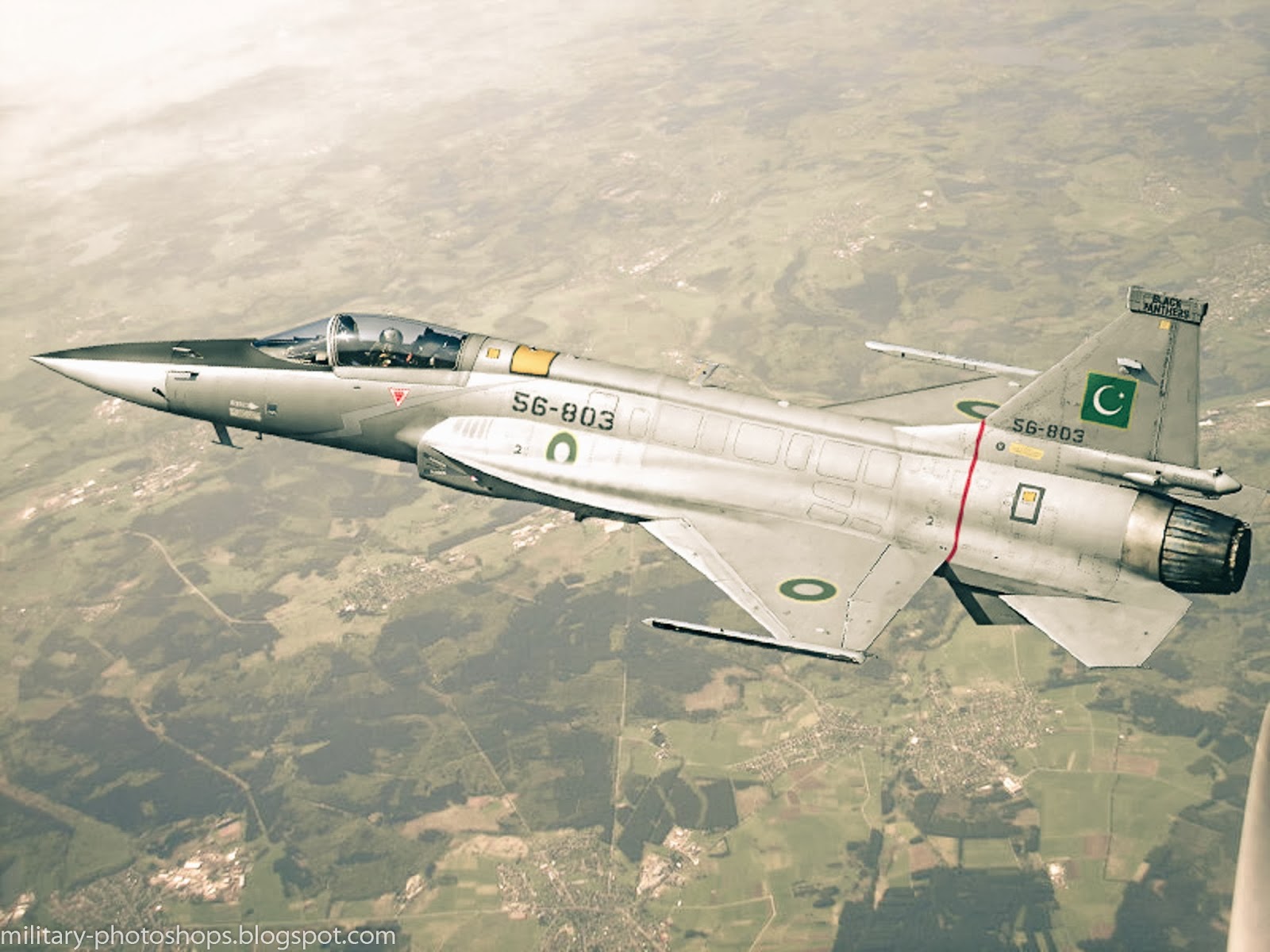
Stealthy Jf17 block 2 its maiden flight


This design incorporates the idea of affordable stealth as the small size of jf17 does not allow the placement of an internal weapons bay. Though the decrease in range can be accounted for by IFR . So this prototype of jf17 has to carry weapons on the external pylons. A Jf17 carrying A2A payload will have relatively small profile as compared to A2G payload, and will pose a major threat to enemy forces.

Saturday, February 15, 2014

JF-17 c Block II

[BBN-Defence Reporter] Jf-17c Block II seen here at a PAF air base.

Jf-17, though considered to be a small and agile fighter, has to be the work horse of PAF and that means adaptability to all kinds of Missions and scenarios . Short Range of Jf-17 has been taken care of by adding CFTs, which increase the fuel carrying capacity by 35 %.

Much work has been done on integrating advanced weapons on this new block of JF-17. As is shown here, a fully armed JF-17c with 2x 2000 lb LGBs, 2x Meteor AAMs , 2x Pl-9 AAMs and targeting pod.

Upgradation of avionics sure was of utmost importance. Visible exteriorly are a new IFF, and IRST and a new AESA Radar, indicated by that breech just behind the Radome .


[BBN - Buk Buk News]

Thursday, February 13, 2014

JF-17 carries out new Meteor missile tests in Kamra

Photobucket

BBN- Defence Reporter- : Jf-17 Thunder is the first fighter aircraft in Asia, which has air-launched the Meteor missile. The first Air Launched Demonstration firing took place in 2010 and was followed by several important flight test campaigns during the year.

Meteor is a European collaborative programme between the United Kingdom, France, Italy, Spain, Sweden and Germany. The missile is planned to be the primary BVR air-to-air missile for all the modern European fighter aircraft; Gripen, Eurofighter and Rafale.

[Editor's Note: As the serial no. of This JF-17 shows that the pic is from 2010, but the no. 166 seems to be a typo. ? . As it was stated that the first batch of Jf-17 will comprise of 50 aircraft, the serial no. should have been 266, showing that it is the 66th aircraft from 2nd batch. Dont know why PAC would make such obvious errors. o.O ]

Monday, December 2, 2013

Vintage JF-17 Thunder in PAF F-104 Starfighter Livery


Shown above Jf-17 Thunder of PAF dressed up in PAF F-104 Starfighter bare metal finish from 65' era .

I  tried to replicate the color scheme as correctly as possible  . These here now are black and white pics for vintage feel.

Later i will upload some color pics , inshallah .

Sunday, December 1, 2013

Pakistan Airforce and Egyptian Airforce Jf-17 Block 2 Joint Exercise over Pyramids


Fictional Joint Aerial Exercise between Pakistan Airforce and Egyptian Airforce Jf-17 Block 2  over the Egyptian Pyramids of Giza . The Egyptian Jf17 , i ve drawn here in EAF's high visibility camo, their early F-16 A wear . Could have used the recent one , but this looks cooler . Though its similarity to a target drone like USAF QF-4 Phantom jets is also startling .

Why Egypt use such high visibility camo for its fighter jets ?

PAF No. 27 Squadron Zarrars to be equipped with JF-17 Block II Thunders

Palistan Airforce No. 27 Squadron, nicknamed Zarrars, is a Pakistan Air Force (PAF) squadron tasked with the role of tactical attack. It is assigned to the No. 34 Tactical Attack Wing stationed at PAF Base Rafiqui (Shorkot), which is under the PAF's Central Air Command.

This is the 3rd squadron to receive CAC/PAC JF-17 Thunder aircraft, jointly developed by Pakistan and China. These Block II JF-17 have a new Multi-mode Radar with improved A2G modes including SAR, Terrain following Radar, Improved navigation systems, and FLIR .Addition of these aircraft will greatly improve the tactical strike capability of Pakistan Airforce .

The squadron was formally raised on 19 April 2007 at PAF Base Rafiqui and was previously equipped with Dassault Mirage 5EF ROSE III combat aircraft. The first commanding officer was Wing Commander Shafqat Mushtaq and the first Senior Engineering officer was Squadron Leader Najam-ul-Hasnain. The Zarrars are tasked with to carry out night air assault operations, and currently participating in recent air assault target operations.

Wednesday, November 20, 2013

Indian Perspective on China's Export Stealth Fighter J-31

Chinese media reports Quoting Chinese military commentator Lei Ze mentioned how emergence of the Chinese fifth generation J-31 fighter jet will make it difficult for the US to export its F-35 fighters , he also said that Currently, the only fifth generation fighter available for sale is the F-35 by the US. The J-31 will offer an alternative for non-traditional allies of the US.”

Indian Defence analysts Vinayak shetty thinks otherwise and says that it is unlikely that J-31 will affect export sale of F-35, “Many countries are firmly behind F-35 Project, even when Prices have surged upwards recently but it is unlikely any of the current customers will even consider buying Chinese J-31 even if aircraft hits production now” . While J-31 is still in testing phase and good 7 to 8 years before enters production, while F-35 is all set to enter fully fledged Mass production soon.

J-31 Stealth Fighter
While analysts say the Pakistan Air Force (PAF) might be one of the earliest customers of the fighter aircraft, but Vinayak shetty believes it will not be easy for PAF to procure these fighters, PAF are already struggling to buy hand full of J-10 fighters for last few years, even with Soft Loan offer provided by Chinese. PAF on other hand in past were always reluctant to operate twin engine fighter aircraft of medium capability size due to higher operating cost involved.
With No 5th generation fighter aircraft Project coming out of Europe many of these countries will be F-35 operators, and Russian Pak-Fa will capture export orders from traditional Sukhoi 30 / Mig operators in Asia. Traditional Chinese fighter aircraft market (Africa / Asian) countries will struggle to operate 5th generation fighter aircraft, so it will be very difficult for Chinese to push sales in their traditional market and difficult to break into American traditional partners, unless sale is bogged down by Us Export restrictions.
Vinayak shetty also have raised concern about a potential arms race in Asia due to emergence of Chinese J-31, many countries that are neighbours of China and have some unsolved issues with them, might now consider buying expensive F-35 or Pak-fa actually boosting their sales in return.
Currently many countries are also working on their own 5th generation fighter aircraft projects other than Russian, Us and China. India is working on Advanced Medium Combat Aircraft, Japanese on Mitsubishi ATD-X , Turkey on TFX and Russia again on single engine cheaper stealth fighter aircraft based on Mikoyan LMFS , which all might actually eat into J-31 export orders .

Saturday, October 26, 2013

Iranian Airforce IRIAF JF-17 Thunder Block II


Officials from Argentine aerospace company Fabrica Argentina de Aviones (FAdeA) told IHS Jane's at the 2013 Paris Air Show they have had multiple discussions with Chinese officials over potential co-production of the Chengdu Aircraft Corporation (CAC) FC-1/JF-17 multirole combat aircraft.

Thursday, October 24, 2013

Wednesday, October 23, 2013

China Reveals Two-seat FC-1/JF-17 at Paris Airshow

First delivered in 2007, the Chengdu FC-1 Xiaolong (Fierce Dragon) is a Chinese multirole fighter designed solely for export. The first and so far only customer is Pakistan – which calls it the JF-17 Thunder and is manufacturing it under license – although several other countries have expressed interest.
China National Aero-Technology Import & Export Corp. is showing, at the Paris air show a two-seat version of the FC-1, presumed to be for pilot conversion training.
China and Pakistan are accustomed to employing dissimilar types of trainers for frontline aircraft: Witness FT-6s for the A-5 “Fantan” attacker. In recent years, however, the logic for a more representative trainer has become stronger.
Pakistani JF-17s have appeared statically at Farnborough and flown at the Dubai air show, but Le Bourget visitors will have to be satisfied with a model of the new version. There is no evidence that a tandem-seat FC-1 has flown . (phsssss)

Vintage JF-17 Thunder in PAF F-104 Starfighter Livery - II

1965 Pakistan-India War
During the 1965 War, PAF was forced to rely on its small force of F-104A   Starfighters as high altitude interceptors and in its night fighting   role, using the radar of its AN/ASG-14T1 fire-control system, in   conjunction with Sidewinder air-to-air missiles.  
After 1 September, the F-104s were extremely active in Air Defence and   Air Superiority Operations, but of the 246 missions flown by F-104s   during hostilities, 42 were at night against the IAF Canberras. The   rudimentary fire-control radar met the Soviet high altitude bomber   threat of the Cold War era for which it was designed but it could not   illuminate small targets against ground clutter. The standard high speed   intercept tactic employed by PAF’s F-104 pilots was to approach their   targets from below, with a typical height differential of 2-3,000 feet,   against a target they wished to acquire at a range of 10-15 kilomenters.   This limitation was well known to the Canberra jet bomber pilots of IAF   who attacked targets in Pakistan during the 1965 war. They adopted a   standard hi-lo-hi profile to minimize the threat of interception. During   most of their inbound and outbound flight over Pakistani territory the IAF Canberras would stay below about 1000 feet during their approach and   exit phases. This posed a difficult night intercept problem. The PAF’s   F-104s had in these circumstances to be used in an unconventional   low-altitude intercept profile that severely challenged the capabilities of its airborne radar. To pick up the low flying bombers on their scope   the F-104 pilots had to get down to about 300-500 feet above the ground   to point their radars upward and clear of ground clutter at the enemy   bombers. The problem was aggravated by the Canberra’s tail warning audio   alarm that would go off the moment an F-104 got to a near astern position, and enable the bomber to take timely evasive action to shake   off its pursuer.  
The F-104s were highly dreaded by the Indian Air Force (IAF). On 3rd September, 1965, even before the War began, an Indian Gnat surrendered to an F-104 which forced it to land at the abandoned airfield of Pasrur (in Pakistan). Its pilot Squadron Leader Brijpal Singh Sikand became a   POW.  
On 6 September, two Starfighters were sent on dawn patrol from   Sargodha. They were vectored by Sakesar Radar towards 4 IAF Mysteres   engaged in bomb and rocket attacks against a stationary passenger train   at Gakkhar railway station. One of the F-104 pilots was forced to return   to base with a radio failure but the other pilot, Flight Lieutenant   Aftab Alam Khan dived his F-104 with full after burners, going supersonically through the Mysteres formation which promptly scattered. The Indian aircraft tried to escape at about 50 feet above the ground   but they were no match for the Starfighter. Aftab destroyed one Mysteres with his Sidewinder missile thus achieving one of the world’s   first air victories by a mach 2 combat aircraft.  
The other F-104 pilot, Flight Lieutenant Amjad Khan, who had missed his chance the previous day, made amends on 7 September. He was scrambled in   an F-104 at about 05:15 hours and directed by Sakesar radar towards an   incoming raid at Sargodha. He made visual contact with the IAF   Mysteres and headed towards them. By the time he caught up with them,   the Indian aircraft were 6-8 miles away from Sargodha, flying at 150-200 feet on a south-easterly heading towards India. As the Mysteres jettisoned their drop tanks, Flight Lieutenant Amjad Hussain positioned   himself behind one of them and released a GAR-8 missile, which went   straight into the ground. The Mystere then began to dogfight with the   Starfighter, which used its superior climb and acceleration to lift the   combat from ground level to about 7,000 feet to gain room for manoeuvre. Hussain fired his cannons and was delighted to see the shell hit the   Mystere. The Mystere pilot showed commendable courage in staying   with the F-104, and despite being mortally wounded, scored several cannon strikes on the Starfighter. Flight Lieutenant Amjad Hussain   managed to eject safely and reached his Base. This was the first and   only Starfighter to be lost through enemy action in the 1965 war. The   Indian pilot Squadron Leader A.B. Devayya was posthumously awarded the   Maha Vir Chakra in 1988, twenty three years after the war, when Indian   authorities learnt of the IAF pilot’s valour through an account of the   encounter published in John Fricker’s book Battle for Pakistan,   published in 1978.  
On 21 September, Squadron Leader Jamal A Khan, intercepted an Indian Air   Force Canberra at about 33,000 feet and shot it down with a Sidewinder near Fazilka, inside Pakistani territory. The bomber’s pilot, Flight   Lieutenant Manmohan Lowe ejected and was made POW while its navigator,   Flying Officer A K Kapor could not bail out and was killed in action.   The British made Canberra, unlike its American counterpart the Martin   B-57, had no ejection seat for the navigator. This was the first kill   achieved by an F-104 at night after a number of near misses due to   factors described earlier.
F-104s were also used during 1965 for low level, daylight reconnaissance   missions over the IAF air bases. The speed of the Starfighter gave the   Indians no time to react. The F-104s were also employed as escorts for   the slow Lockheed RT-33 reconnaissance fighters on photographic missions   deep into Indian territory, the presence of Starfighters virtually   guaranteeing that no air opposition would be encountered. Six F-104   pilots received gallantry awards during the 1965 War.
Sunday, May 27, 2012

What IF ? Sukhoi T-50 for the Pakistan Air Force

[Military Photoshops : News Desk] As tensions between Pakistan and US grow to a melting point, Pakistan has, in move which baffled the world politics moved away from its partnership from US in every aspect of IR from Trade to Military Co-operation. This moved has been welcomed by China and Russia alike. Pakistan is now looking to develop its trade relationships with its neighbouring countries, something which shouldve been done half a century ago. Russia in an unfathomable display of trust has permitted the release of its top most stealth fighter Sukhoi T-50 . Russia has also assured to play its part in resolving the Kashmir issue. Indian reservations have been buffed aside in part due to her recent honey moon with US and European nations and because Russians believe that if Kashmir Issue is resolved peacefully, India and Pakistan would have no reason to war any longer .

Monday, May 14, 2012

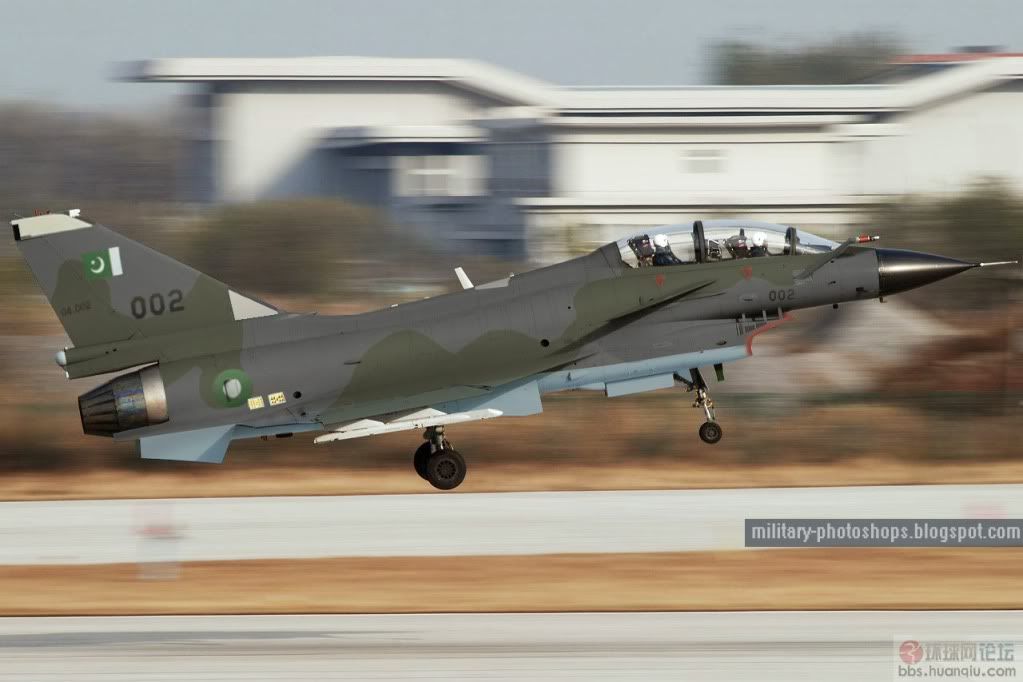
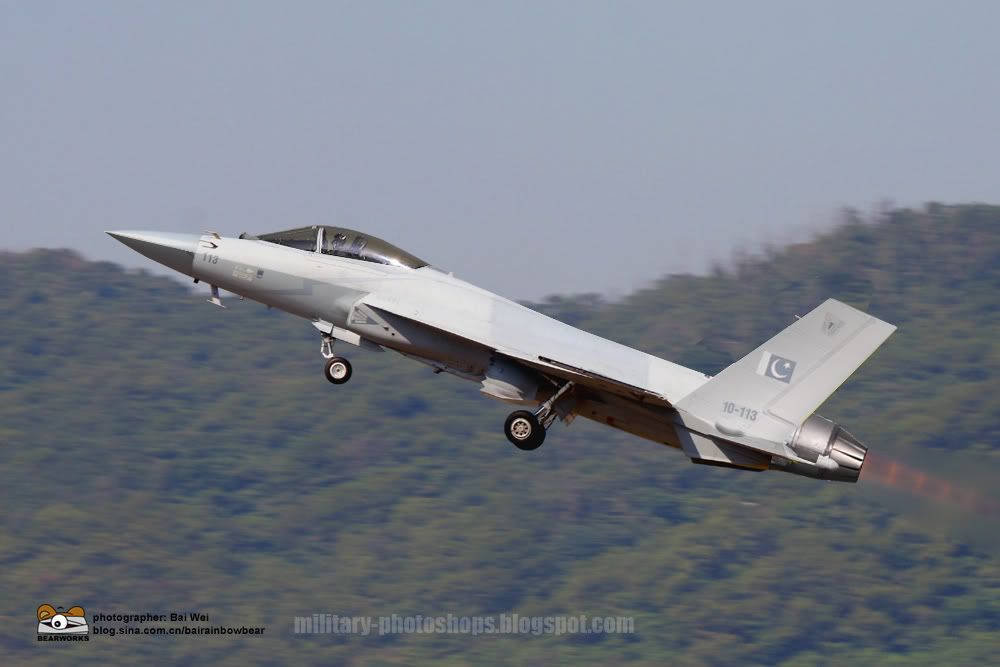
Two-Seater JF-17 Flies

AVIC and PAC were working on a two-seat version of JF-17 Thunder. The two-seat version will be used for conversion training and can also be adapted for combat roles. The development is not at the stage where the deliveries can be made. 

The single seat version was designed in such a way that a two-seat version could later be adapted

Saturday, May 5, 2012

Pakistan Air Force JF-17 Thunder Wallpaper [HD] [1024x768]

This wallpaper shows 3 Jf-17 from 3 different PAF sqadrons flying low in a close formation .


JF-17 Thunder is an advanced, light-weight, all weather, day / night multi-role fighter aircraft; developed as a joint venture between Pakistan Aeronautical Complex (PAC), Kamra and Chengdu Aircraft Industry Corporation (CAC) of China. It possesses excellent air-to-air and air-to-surface combat capabilities. The state-of-the art avionics, optimally integrated sub-systems, computerized flight controls and capability to employ latest weapons provides decisive advantage to JF-17 over adversaries of same class. This, all weather, multi-role light combat fighter has remarkable high combat manoeuvre ability at medium and low altitude. With effective firepower, agility and combat survivability, the aircraft is likely to emerge as a potent platform for any air force.

Thursday, April 5, 2012

Chengdu J-10 S in PAF Mirage III/V Color Scheme

J-10 S seen here in PAF Mirage color scheme which it is replacing .


PAF ordered its first batch of 24 J-10 S in 2006 to replace its older Mirage V fighter/bombers and a second batch  comprising 18 J-10 S to form 3 strike squadrons. These aircraft will be used in deep strike at key strategic enemy positions during the first wave of attack .

The J-10 (Jian 10 or Fighter 10) is China's indigenously built multirole fighter aircraft developed by the Chengdu Aircraft Industry. Chengdu Aircraft Industry is part of the China Aviation Industry Corporation I (AVIC I). In the West the J-10 aircraft is known as the Vigorous Dragon.

It is estimated that up to 300 J-10 fighter aircraft will be manufactured. China's People's Liberation Army (PLA) includes the army, navy, air force and strategic rocket force. The air force (AFPLA) has 200 fighter and fighter ground attack squadrons and 120 strike fighter squadrons.

The J-10 aircraft is considered the replacement for the J-7 and Q-5. The air force currently operates about 250 J-7 (MiG-21) air defence and attack aircraft and about 500 Q-5 attack aircraft.

China formally announced the J-10 in February 2007. The existence of the J-10 was first reported in 1994, but the J-10 programme was started in 1988 and the first flight of the single seat aircraft took place in 1998. A two-seater variant made its first flight in 2003.

There are reports that the J-10 entered service in 2005 and is operational in single seater and two seater versions in at least two PLA air force squadrons.

The first native fourth-generation J-10 aircraft was unveiled by the air force in April 2010. Four J-10 fighter jets were showcased by the 24th fighter division of AFPLA. Pakistan will receive the first export versions of the J-10, up to 36 aircraft, by 2015. China and Pakistan have worked closely on the development of another fighter aircraft, the JF-17 or FC-1 light fighter aircraft.

Friday, March 30, 2012

The Tigers : PAF 2nd aerobatic team

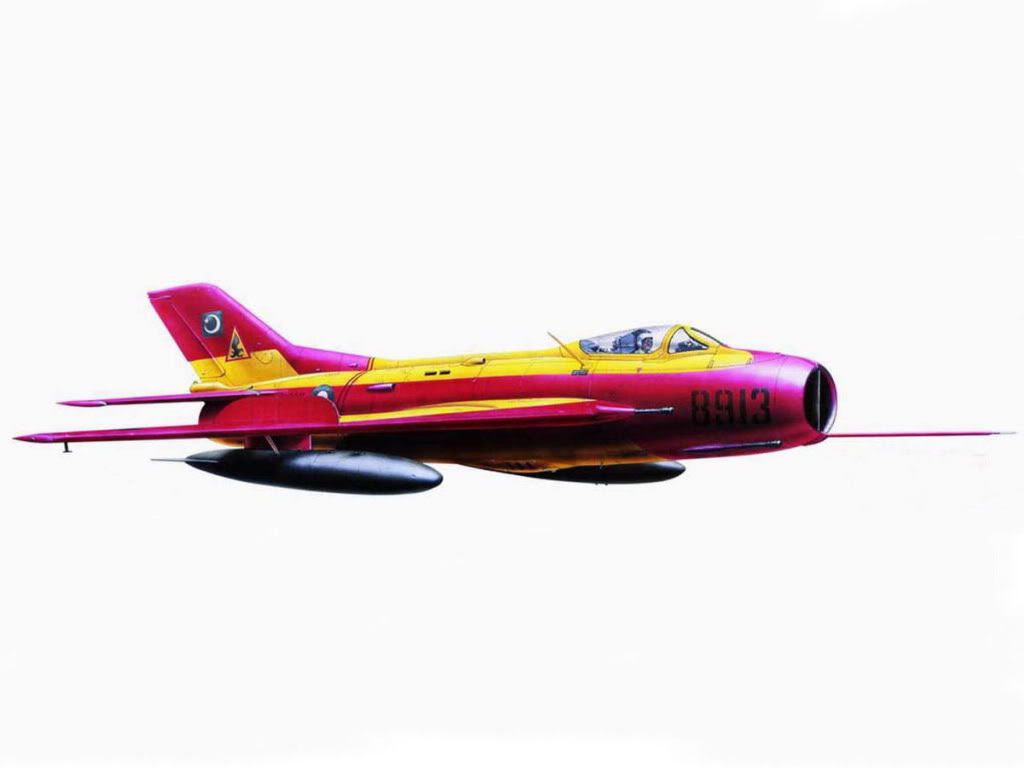
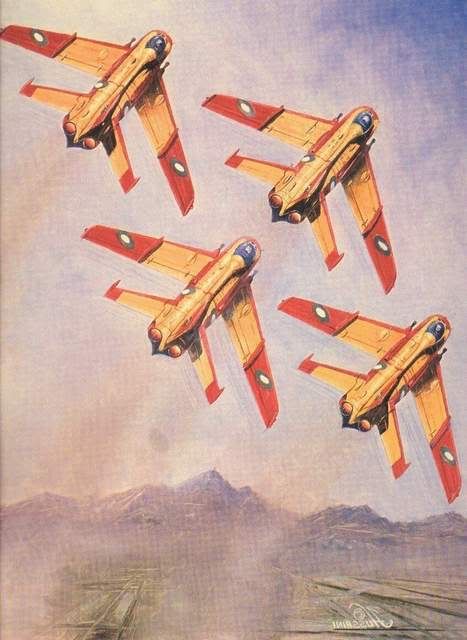
PAF Tigers Aerobatic display team F-6 / MiG-19, Unknown Artist.
PAF Tigers Aerobatic display team of 4 ship F-6 / MiG-19 formation.

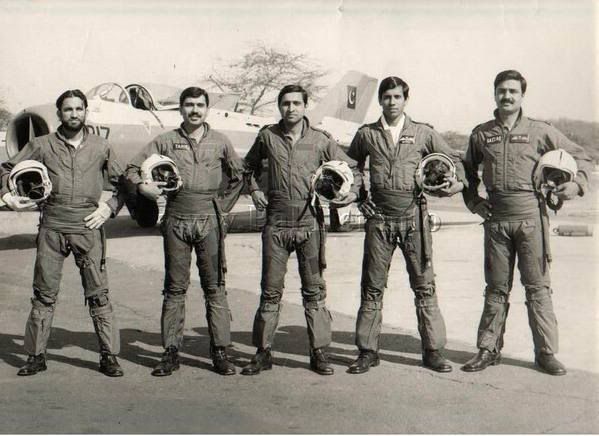
Pilots of PAF Tigers Aerobatic display team F-6 / MiG-19 . Rare photo of the original plane can be seen in the background.


The second formation aerobatic team on the F6 MiG19 fighters of the PAF was called The Tigers. Like its predecessors: The Rattlers, 1969, the second team was also formed at Sargodha Airbase. The F6 was a high energy fighter of its time on which formation aerobatic displays were especially demanding because the F6 needed skillful piloting during low airspeed manoeuvres. The Team: (1) Squadron Leader Hasnat Ahmed (Lead) (2) Squadron Leader Imtiaz Ali Khan (Right Wing) (3) Squadron Leader Tahir Ahmed (Left Wing) (4) Flight Lieutenant Nazar Hussain (Slot) (5) Flight Lieutenant Abdul Razzaq (Reserve) 

Monday, March 12, 2012

PAF A-5c Fantan flying over Pishawar

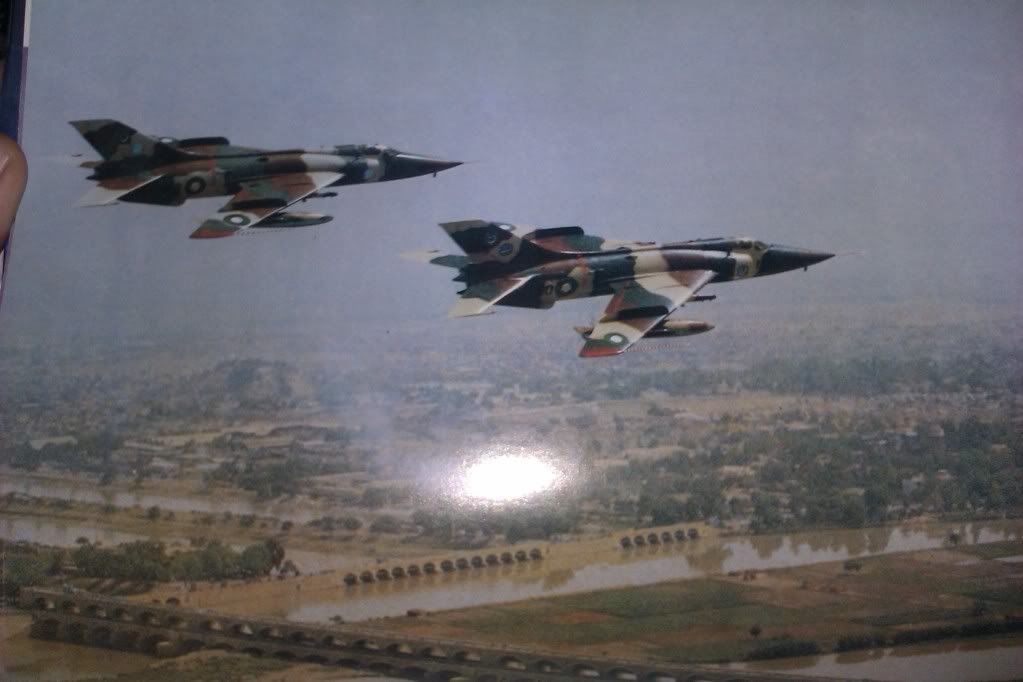
PAF Twin ship A-5 c Fantan Formation flying over Pishawar.

The A-5C Fantan is export designation of the Chinese designed J-5 (Attack aircraft 5), which is a twin-jet attack aircraft, derived from J-6/Mig-19 earlier produced in the People's Republic of China.

According to one report, at least 210 Fantan-As were in service with the PLA Air Force by 1979, serving with tactical attack squadrons of the People's Liberation Army.

A 1980 report declared that the aircraft had been built in relatively large numbers, and it is known to serve also in an air defence role with the air arms of the PLA Navy. The total number in Chinese service in now probably in the region of 500-800.

Deliveries of an initial batch of 52 export A-5's to the Pakistan Air Force began in February 1983 and have been completed.

The configuration of the PAF's A-5's differs considerably from that of their Chinese counterparts, several design features having been introduced at Pakistan's request to increase the aircraft's strike range and enable it to carry several additional types of weapons.

Saturday, February 25, 2012

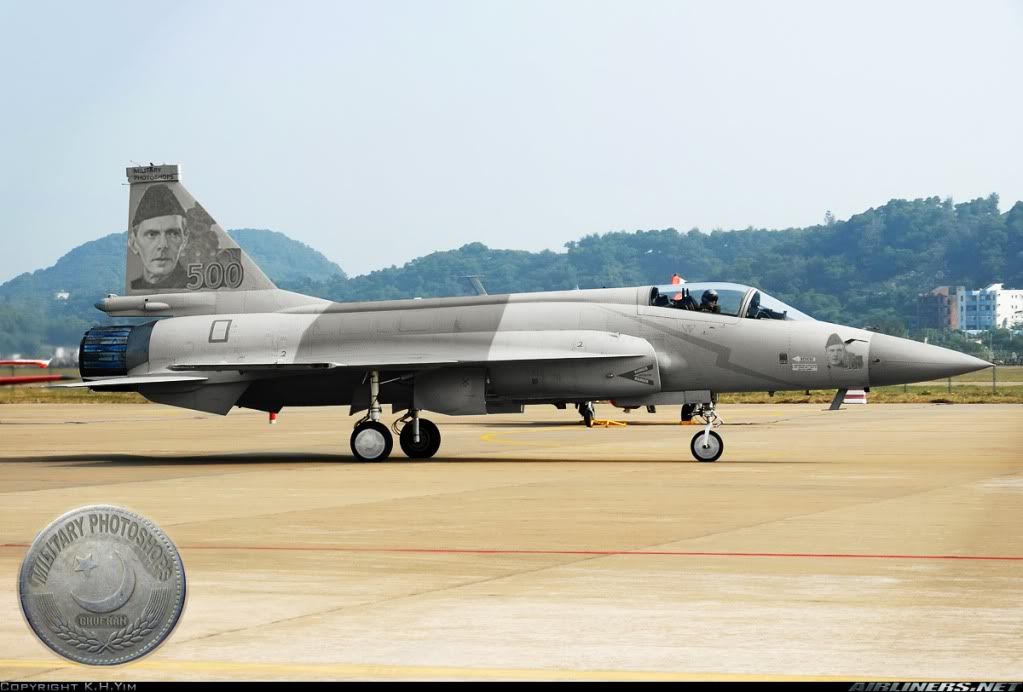
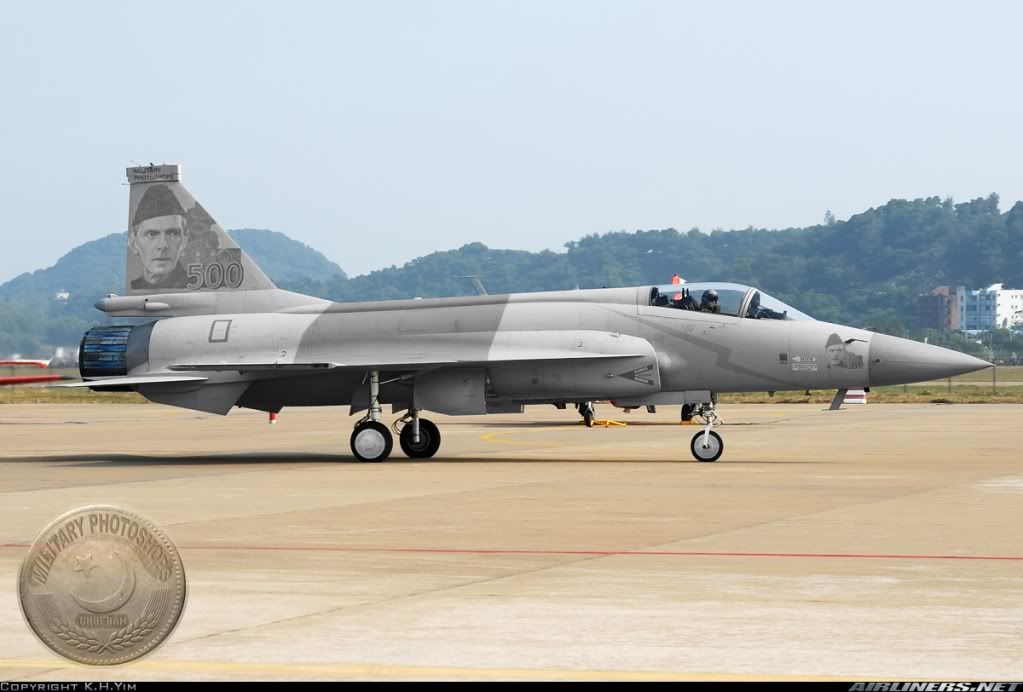
500th Serial Production Jf-17 in Special Marking v1.2

v1.2 0f earlier photo here.

This JFT is painted in special markings to commemorate the 500th production plane from PAC Kamra, also paying homage to Baba Quaid e Azam, Mohammad Ali Jinnah, also known as "J-the Mystery Man", whose vision led to the carving of Pakistan on the face of the sub-continent, which then led to co-operation between Pakistan and China and ultimately to Jf-17 Thunder project .

Also Note the paisa theme . Baba ji has been cropped from Rs. 500 Pakistani Ruppee Note and on Tires This Jf-17 has 1 Rupee like rims.


500th Serial Production Jf-17 in Special Marking Photo

This JFT is painted in special markings to commemorate the 500th production plane from PAC Kamra, also paying homage to Baba Quaid e Azam, Mohammad Ali Jinnah, also known as "J-the Mystery Man", whose vision led to the carving of Pakistan on the face of the sub-continent, which then led to co-operation between Pakistan and China and ultimately to Jf-17 Thunder project .

Baba G zindabaaaaad....... !


Thursday, February 23, 2012

End of Global Hawk ?

PAF's manned Global Hawk.
Is it really the end forGlobal Hawk ? While America struggles to keep the Global hawk program alive, Pakistan has picked it up as its premier intelligence and recon unit. Albeit with a few modifications, most obvious is the conversion of Unmanned drone to a Manned airplane. 


As reported by Avionics Intelligence .
  • The report reads: “When we initially invested in the Global Hawk Block 30 program, it held the promise of providing essentially the same capability as the U-2 manned aircraft for significantly less money to both buy and operate. As the program has matured, these cost savings have not materialized and, at best, we project the future cost of Global Hawk Block 30 operations to be comparable with the U-2. In this five-year budget, the cost of the Global Hawk program would significantly exceed the cost of the U-2 so we cancelled Global Hawk Block 30 and extended the U-2 program. Although this is a significant disappointment, our experience with Global Hawk Block 30 will help other Global Hawk programs like the Air & Broad Area Maritime Surveillance (BAMS).”

LinkWithin

Related Posts Plugin for WordPress, Blogger...