Showing posts with label F-14 tomcat. Show all posts
Showing posts with label F-14 tomcat. Show all posts
Thursday, October 24, 2013
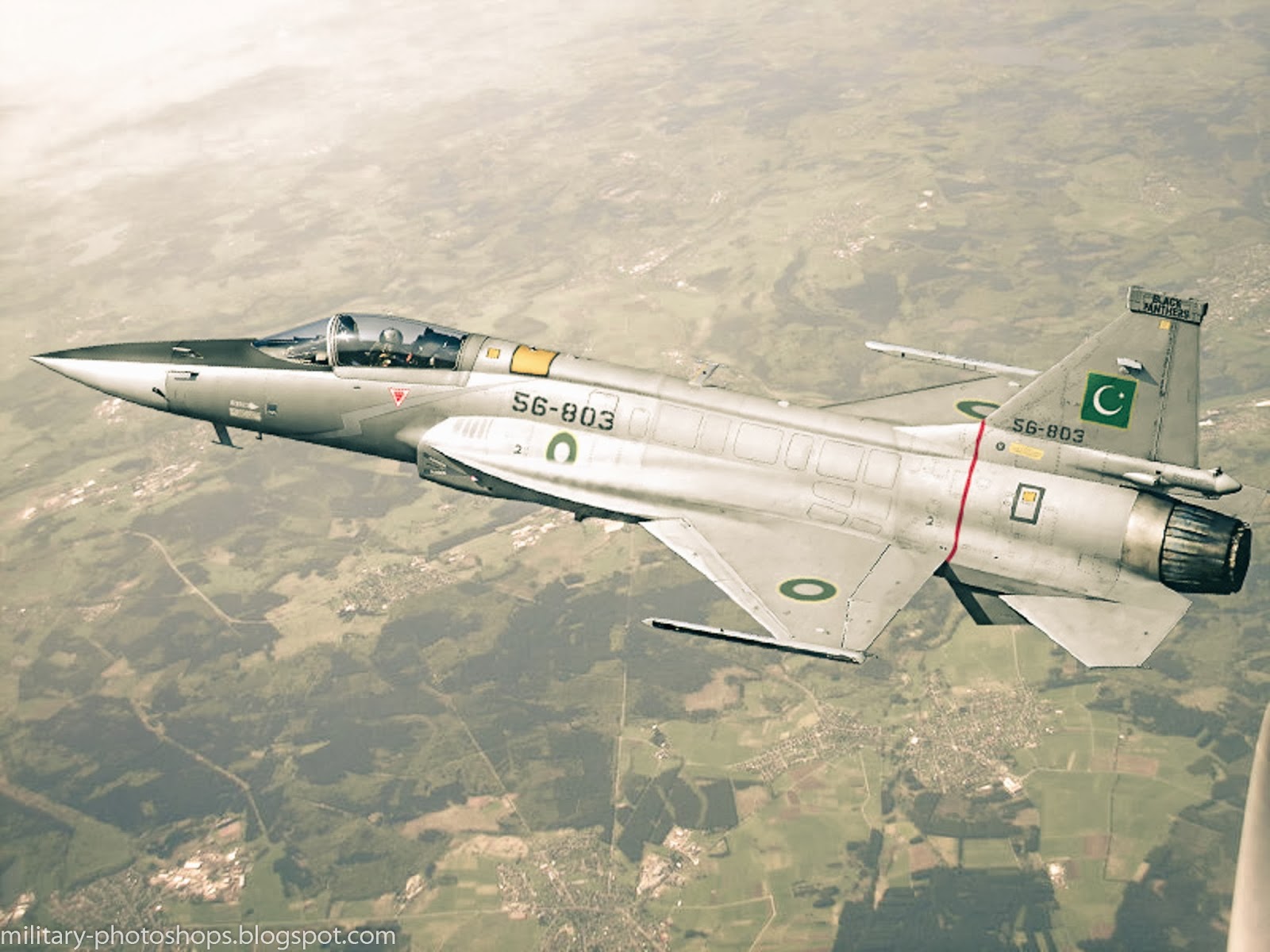
Vintage JF-17 Thunder in PAF F-104 Starfighter Livery III


Wednesday, May 2, 2012
Dutch Air Force display team F-14 Tomcat flying over an African coast
 |
| Dutch Air Force display team F-14 Tomcat flying over an African coast. |
Dutch Solo F-14 Tomcat Demo Plane at The International Paris Air Show (SIAE)
The International Paris Air Show (SIAE) at Le Bourget has featured as the world's premier and largest event dedicated to the aviation and space industry for more than a century. And for the first time ever brings to you Solo Display by The Royal Netherlands Airforce Demo team F-14 Tomcat.
 | |
| The Royal Netherlands Airforce Demo team F-14 Tomcat makes a low and scares the Jesus out of the spectators. ooooo raaa |
Since it began, the show has been at the very heart of the development of the global aviation and space industry. Over the years, it has become the industry's key networking event.
The last International Paris Air Show at Le Bourget in June 2011 broke all previous records in terms of numbers, with 2,113 international exhibitors, 355,000 visitors, 290 professional delegations and 150 aircraft present.
Tuesday, May 1, 2012
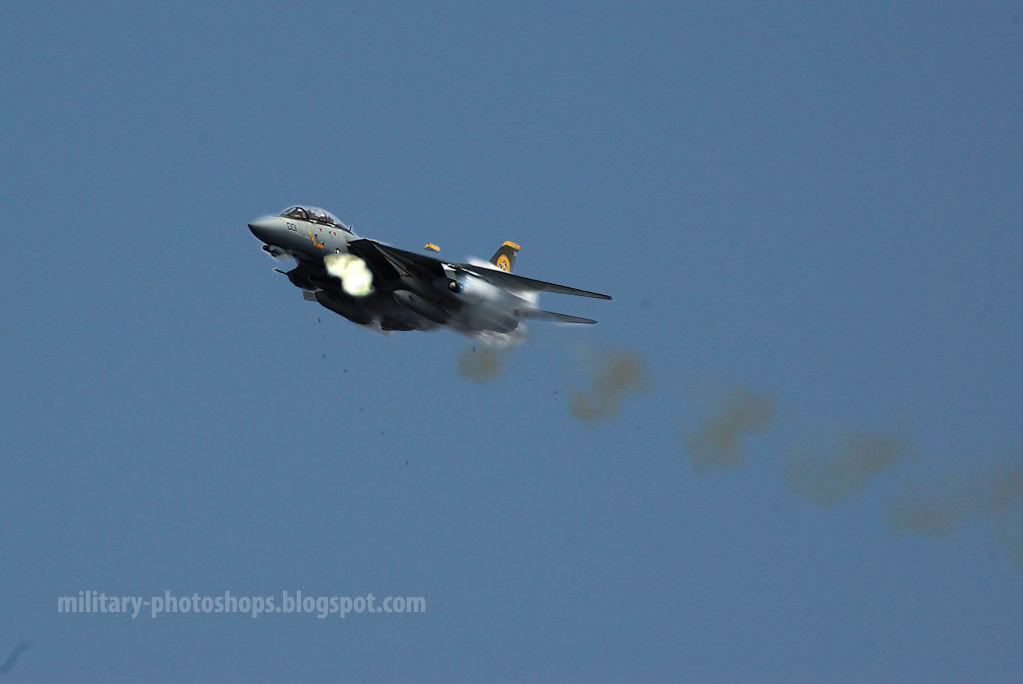
The Royal Netherlands Airforce F-14 Tomcat Demo Jet
An Royal Netherlands Airforce F-14 Tomcat Demo Jet makes a high speed pass over Dallas .


- Followed Distant Star's Advice : Mil Psd, this is sick! but you need to do few things. use radial blue set at zoom/bes/9 pxl from left to right and set the center of the radial blur at the left center of the frame near the nose of the tomcat. and erase 90% of this blurred tomcat over the back of the main tomcat and make sure its layer is under the main tomcat and not over it.
F-14 Tomcat asThe Royal Netherlands Air Force Demo Team

Tried my hand with a Northrop Grumman F-14 Tomcat as RNLAF demo team solo demonstrator . Added motion blur to aircraft and the background . Tried to give it a little bit of perspective. But i still have a lot of ground to cover. I am not quite happy with the end result here. Obviously i cant dream to compete with the top tier artists in the field but i still need to improve :]
“One Team One Mission” is the motto of the Royal Netherlands Air Force. This motto applies to the Royal Netherlands Air Force F-16 Demo Team as well.
The team around the display pilot exists of two coaches who are also F-16 pilots, six highly skilled technical specialists and two advisors.
This team offers every conceivable support to the air display pilot throughout the entire demo season, which comprises about 30 shows in all. The team also receives full further support from their home base Leeuwarden AB and its staff wherever necessary. What sets the Dutch team apart from some other display teams is that besides performing aerobatic displays, all members are also current operational personnel of the Air Force.
They perform daily operational tasks and are deployed to operational theatres even during the demo season. This enables the team to be truly current operational representatives of the Royal Netherlands Air Force.
Saturday, January 7, 2012
F14 tomcat in the Gulf War


A
Fighter Squadron 74 (VF-74) F-14A Tomcat aircraft taxis past three
other Tomcats on the flight deck of the aircraft carrier USS SARATOGA
(CV-60)

An
F-14 Tomcat assigned to the "Swordsmen" of Fighter Squadron (VF) 32
launches off the number two steam powered catapult aboard the
Nimitz-class aircraft carrier USS Harry S. Truman (CVN 75). Currently,
aircraft from Carrier Air Wing (CVW) 3 embarked on Truman are providing
close air support and conducting Intelligence, Surveillance and
Reconnaissance (ISR) missions in ongoing operations. The Harry S. Truman
Carrier Strike Group and CVW-3 are currently on a regularly scheduled
deployment in support of the global war on terrorism.

An
AIM-54C Phoenix missile and two chaff and flare dispensers sit on skids
beside a Fighter Squadron 103 (VF-103) F-14A Tomcat aircraft on the
flight deck of the aircraft carrier USS SARATOGA (CV-60) during gulf
war.

An
F-14A Tomcat aircraft refuels from a U.S. Air Force KC-10A Extender
aircraft as other Tomcats fly in formation, during Operation Desert
Storm. Squadrons represented by the aircraft are, from foreground:
Fighter Squadron 33 (VF-33), Fighter Squadron 84 (VF-84) and Fighter
Squadron 14 (VF-14).
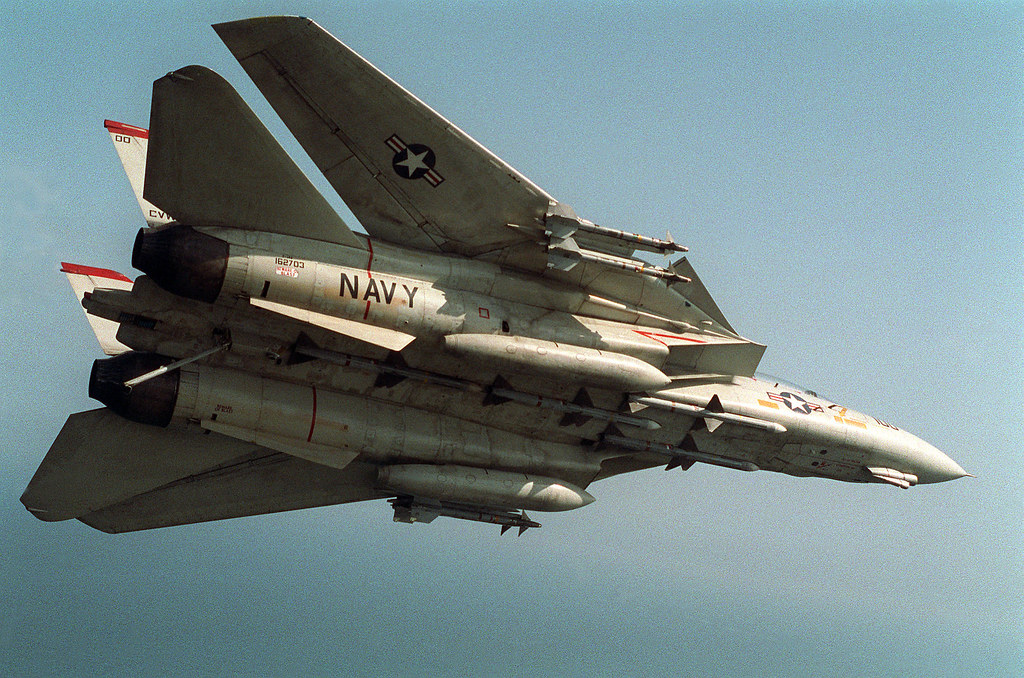
 An underside view of a Fighter Squadron 41 (VF-41) F-14A Tomcat
aircraft on a Combat Air Patrol (CAP) during gulf war. The aircraft is
carrying four AIM-7 Sparrow missiles under its fuselage and two AIM-9
Sidewinder missiles on each wing pylon.
An underside view of a Fighter Squadron 41 (VF-41) F-14A Tomcat
aircraft on a Combat Air Patrol (CAP) during gulf war. The aircraft is
carrying four AIM-7 Sparrow missiles under its fuselage and two AIM-9
Sidewinder missiles on each wing pylon.

Three
Fighter Squadron 32 (VF-32) F-14A Tomcat aircraft fly in formation over
the desert during gulf war. VF-32 is based aboard the aircraft carrier
USS JOHN F. KENNEDY (CV-67).

An
F-14 Tomcat aircraft of Fighter Squadron 103 (VF-103) prepares for
refueling during gulf war. The aircraft is armed with AIM-7 Sparrow and
AIM-9 Sidewinder missiles.
Action in Desert Storm--
As an
air-to-air fighter, the F-14 did not get to see much of the Iraqi Air
Force given their destruction and their desire not to fly.Fleet
deliveries of Navy F-14D fighters began in March 1990, but the fighters
did not have a defensive system to jam signals from radar-guided
missiles homing in on the aircraft. F-14's were used to provide combat
air patrols over attacking carrier based aircraft and their ships, an
F-14A from VF-103 was shot down by an SA-2 surface-to-air missile while
on an escort mission near Al Asad airbase in Iraq. A total of 4,124
sorties were flown by the 99 F-14 Tomcats deployed to the Gulf.for a
total of 14,248 flight hours.




F-14 fighter jet wallpapers

 Lieutenant West McCall F-14 pilot from Deland, Fla., and Lieutenant
Kimberly Arrington, a Radar Intercept Officer from King, N.C., test fire
a Phoenix air to air missile as part of an Annual Proficiency exercise.
Lieutenant West McCall F-14 pilot from Deland, Fla., and Lieutenant
Kimberly Arrington, a Radar Intercept Officer from King, N.C., test fire
a Phoenix air to air missile as part of an Annual Proficiency exercise. Pula, Croatia (Oct. 28, 2002) -- An F-14B "Tomcat" Fighter jet flies in
formation with a pair of MiG-21 assigned to the Croat Air Force.
Pula, Croatia (Oct. 28, 2002) -- An F-14B "Tomcat" Fighter jet flies in
formation with a pair of MiG-21 assigned to the Croat Air Force.
2) Northern Iraq (Apr. 11, 2003) -- A U.S. Navy Grumman F-14 Tomcat assigned to Carrier Air Wing Three onboard USS Harry S. Truman (CVN 75), flies a combat mission in direct support of Operation Iraqi Freedom.

A F-14 Fighter aircraft (VF-143) "Pukin Dogs" receives final maintenance before evening flight operations on the flight deck of USS GEORGE WASHINGTON (CVN73).
 An F14B Tomcat assigned to Fighter Attack Squadron Three Two (VF-32)
(Swordsmen) Prepares to land on the flight deck of Truman . USS Harry S.
Truman (CVN 75)
An F14B Tomcat assigned to Fighter Attack Squadron Three Two (VF-32)
(Swordsmen) Prepares to land on the flight deck of Truman . USS Harry S.
Truman (CVN 75)
An F14D Tomcat assigned to the "Blacklions" of Fighter Squadron Two One Three (VF-213) launches from USS Theodore Roosevelt (CVN 71).

An F14D Tomcat from Fighter Squadron Three One (VF-31), the “Tomcatters,” performs a fly by past the Nimitz-class aircraft carrier USS Dwight D. Eisenhower (CVN 69). The Grumman F-14 Tomcat is a supersonic, twin-engine, variable sweep wing, two-place strike fighter. The Tomcat's primary missions are air superiority, fleet air defense and precision strike against ground targets.(4) U.S. Navy photo by Paul Farley

An F14D Tomcat assigned to the "Tomcatters" of Fighter Squadron Three One (VF-31) launches from the flight deck of aircraft carrier

 Arabian GulfAboard USS Theodore Roosevelt (CVN 71)Sailors part of
Fighter Squadron Three One (VF-31) prepares to do maintenance on an F-14
Tomcat on the flight deck of USS Theodore Roosevelt (CVN 71). The
nuclear powered aircraft carrier and embarked Carrier Air Wing Eight are
currently underway on a regularly scheduled deployment conducting
maritime security operations.
Arabian GulfAboard USS Theodore Roosevelt (CVN 71)Sailors part of
Fighter Squadron Three One (VF-31) prepares to do maintenance on an F-14
Tomcat on the flight deck of USS Theodore Roosevelt (CVN 71). The
nuclear powered aircraft carrier and embarked Carrier Air Wing Eight are
currently underway on a regularly scheduled deployment conducting
maritime security operations.
Arabian
Gulf (July 09, 2004) - An F-14D Tomcat fighter jet assigned to the
Jolly Rogers of Fighter Squadron (VF 103) and an F/A-18C Hornet assigned
to the Sunliners of Strike Fighter Squadron Eight One (VFA 81) makes
final preparation for launch from the flight deck of USS John F. Kennedy
(CV 67). USS John F. Kennedy Strike Group currently on a regularly
scheduled deployment, is taking part in Summer Pulse 04.

OVER
IRAQ -- An F-14 Tomcat flies through the sky during a combat mission
August 14 in support of Operation Iraqi Freedom. (U.S. Air Force photo
by Staff Sgt. Lee O. Tucker 

Thursday, January 5, 2012
USN F-14 Tomcat Fact file and photos
 |
| USN F-14 |
 |
| F-14 goes super sonic |
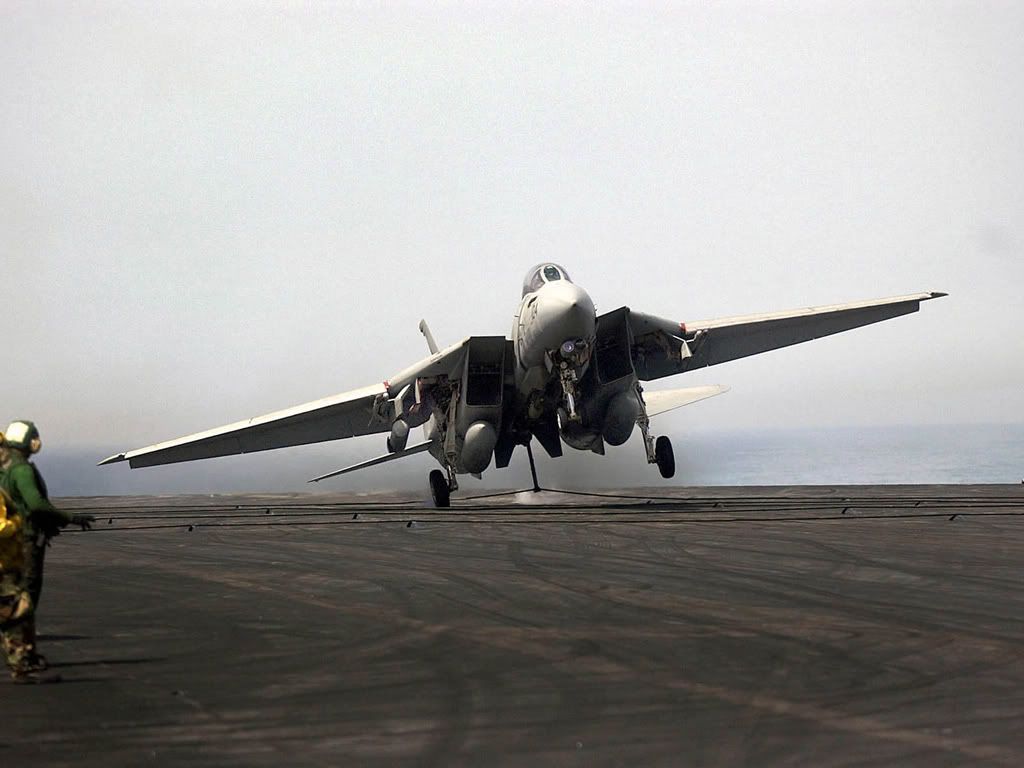 |
| F-14 dangerous carrier landing |
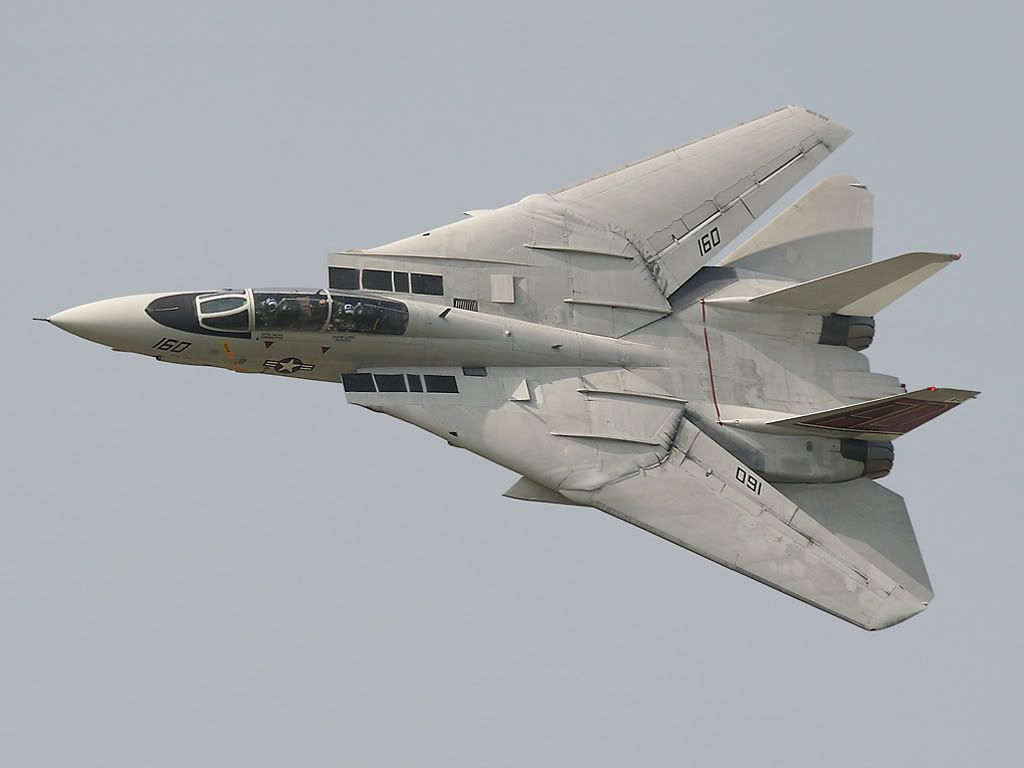 |
| F-14 swing wing fighter, with folded back wings for high speed pass |
 |
| F-14 with spread wings for take off |
Monday, January 2, 2012
IRIAF (iran) F-14 Tomcat Story
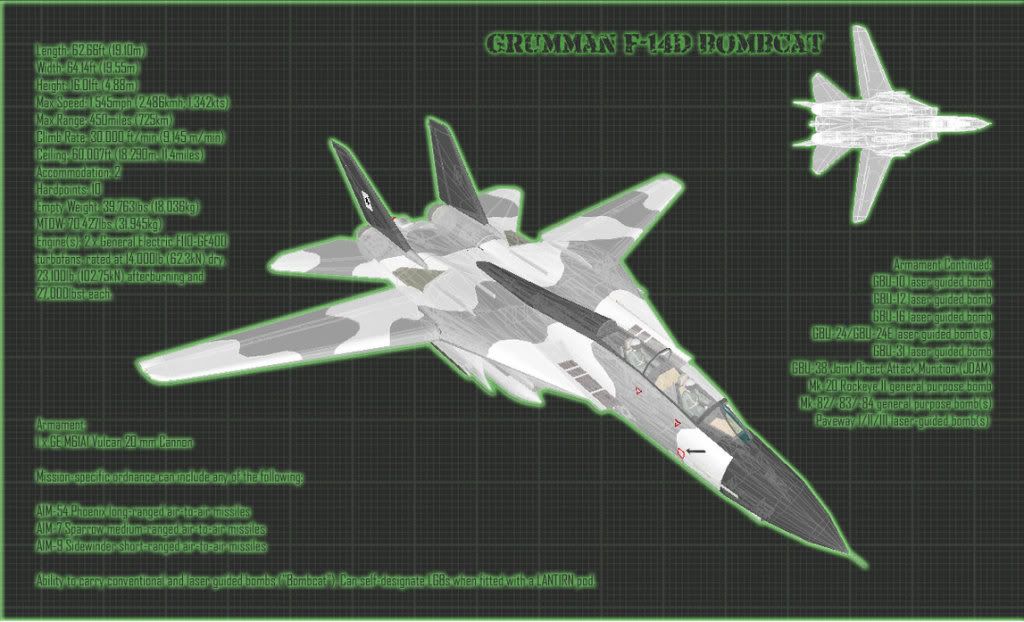
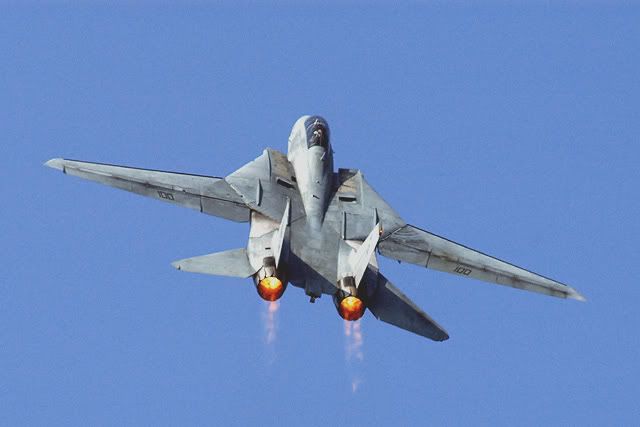
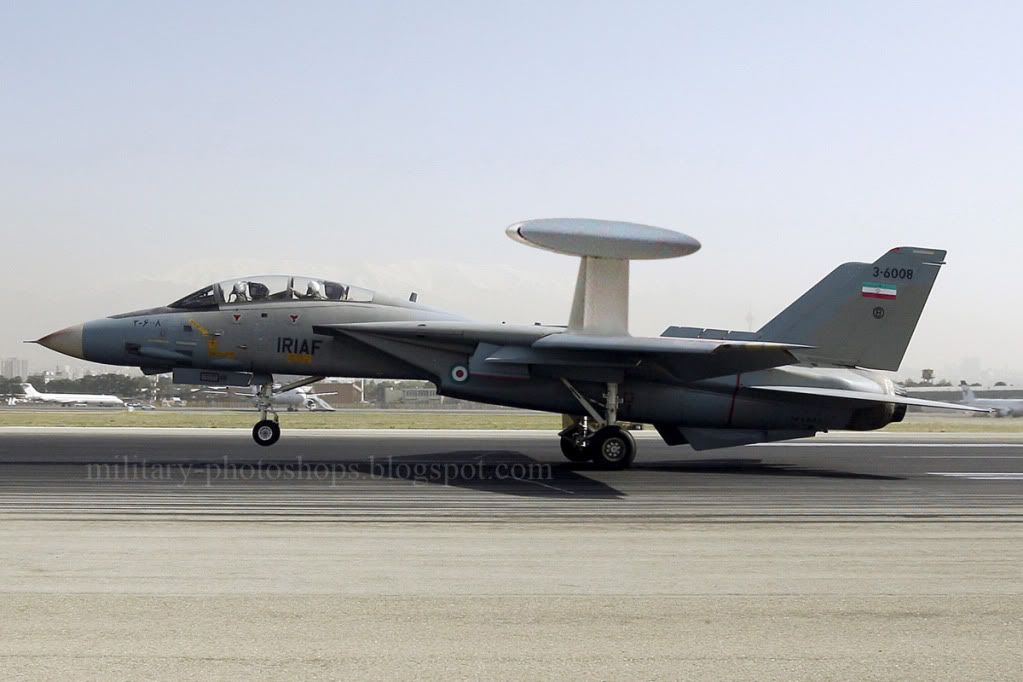
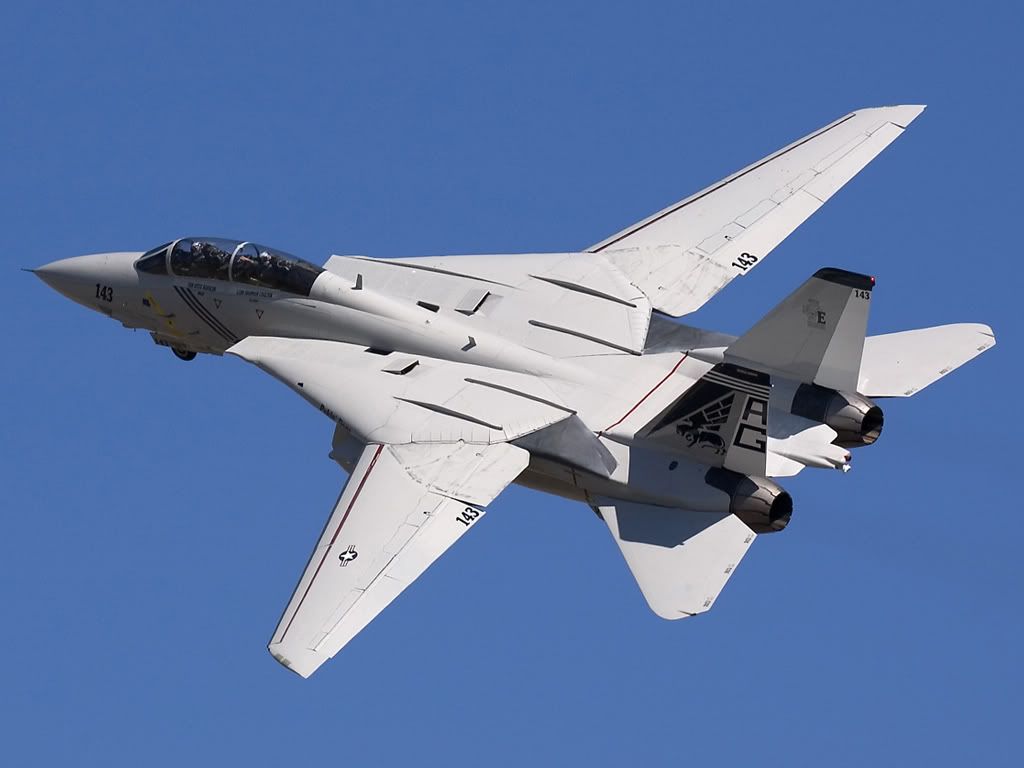
The first and only country to receive F-14 Tomcat was, The Nirouyeh Havaiyeh Shahanshahiye Iran, or Imperial Iranian Air Force.
Soviet MiG-25 Foxbat had regularly been flying unrestricted over Iranian territory, and IIAF had no mean of intercepting these high-speed intruders. Thus, the search for a new fighter/interceptor begun. Iranian pilots were virtually flown and tested every fighter available at the time including MiG's (some done secretly in other countries). The final report which indicated pro's and con's of each fighter suggested the F-14 Tomcat and F-15 Eagle as the best fighters. In August of 1973, the IIAF selected the F-14 Tomcat ( From 1970 Iraq was in contact with French government to equip their Air Force with Mirage F-1, this was another factor for IIAF to choose F-14 and start planning for purchase, operation and training for F-14). The initial order signed in January of 1974 covered 30 Tomcats, but in June 50 more were added to the contract.At the same time, the Iranian government-owned Bank-e-Melli stepped in, and agreed to loan Grumman $75 million to partially make up for a US government loan of $200 million to Grumman, which had just been cancelled. This loan save the F-14 program and enabled Grumman to secure a further loan of $125 million from a consortium of American banks, ensuring at least for the moment that the F-14 program would continue. Thanks to Bank-e-Melli.
The Iranian Tomcats were virtually identical to the US Navy version, with only a few classified avionics items being omitted. The base site for Iranian Tomcat operations was at Isfahan’s (Khatami Air Force Base) and 1 Squadron at Shiraz Tactical Fighter Base. Imperial Iranian Air Force aircrews began to arrive in the USA for training in May of 1974,The crew were mainly veteran F-4 pilots.
The first 4 pilots who came to "Miramar Naval Base" in California for F-14 training were:
General Abdolhosain Minousepehr (Commander of Khatami AFB).
Major Mojtaba Zangeneh
Major Mohammad Farahawar
Capt. Kazem Heidarzadeh
Shortly after, the second group went to "Oceana Naval Base" in Virginia. They were:
Capt. Jamshid Afshar.
Capt. Hosein Taghdis.
Capt. Hassan Afghantoloee.
Capt. Jalil Moslemi.
Capt. Abolfazl Hooshyar.
Capt. Reza Attaee.
Capt. Bahram Ghaneii.
Capt. Mohammad Pyrasteh.
Capt. Abbas Amiraslani.
Capt. Shahram Roostami.
Capt. Javad Shookraii.
After completion of F-14 training in USA they became F-14 Instructor pilots. After returning to Isfahan they started training the rest of the pilots with the cooperation of 4 American F-14 Instructors which was part of contract.
Major Farahawar flew one of the F-14 from USA to Iran.
Major Zangeneh was the Iranian pilot who tested the "Phoenix" missile in USA.
(The Islamic regime purged all of them from Air Force, except "Rostami" and "Attaee" .)
The Iranian Tomcats were fairly late on the production line, and were therefore delivered with the TF30-P-414 engine, which was much safer than the compressor-stall-prone P-412 engine. The first 2 of 79 Tomcats arrived in Iran in January of 1976. By May of 1977, when Iran celebrated the 50th anniversary of the Royal House, 12 had been delivered. At this time, the Soviet MiG-25 Foxbats were still making a nuisance of themselves by flying over Iran, and the Shah ordered live firing tests of the Phoenix to be carried out as a warning. In August of 1977, IIAF crews shot down a BQM-34E drone flying at 50,000 feet, and the Soviets took the hint and Foxbat over flights promptly ended.
The IIAF Tomcats bore the US Navy serial numbers of 160299/160378, and were assigned the IIAF serial numbers 3-863 to 3-892 and 3-6001 to 3-6050. The last of 79 Tomcats were delivered to Iran in 1978. The last Iranian Tomcat (BuNo 170378) was retained in the USA for use as a test bed. Iran also ordered 714 AIM-54A Phoenix missiles, but only 284 had been delivered at the time. Toward the end of the 1970s most suppliers were cancelled by the new government, including an order for 400 AIM-54A Phoenix missiles.
Imposition of a strict arms embargo against Iran by the West caused a severe spare parts and maintenance problem, with many pilots and maintenance personnel following the Shah into exile. As a result, by 1980 the Iranian Air Force was only a shadow of its former self. This embargo was to have an especially severe long-term effect on the Tomcat fleet, since the embargo prevented the delivery of any spares.
The Iran-Iraq war began on September 22, 1980 with an Iraqi air attack on six Iranian air bases and four Iranian army bases. It was followed by an Iraqi land attack at four points along a 700-kilometer front. Air power did not play a dominant role in the Iran-Iraq war. During the first phase of the war, Iranian aircraft had the fuel and the endurance to win most of these aerial encounters, either by killing Iraqi aircraft with their first shot of an AIM-9 sidewinder or else by forcing Iraqi fighters to withdraw. Iranian pilots had the edge in training and experience, but as the war dragged on, this edge was gradually lost because of the repeated purges within the ranks of the Iranian officers which removed experienced officers and pilots who were suspected of disloyalty to the Islamic regime. The Iranians could not generate more than 30-60 sorties per day, whereas the number of sorties that Iraq could mount steadily increased year after year, reaching a peak as high as 600 in 1986-88.
It is extremely difficult to get any reliable estimates of just how many Iranian F-14As were in service at any one time during the war, with planes having been deliberately cannibalized to keep some flying. In the summer of 1984, it is estimated that Iran could fly only 15-20 Tomcats, maintaining them largely by cannibalization. Very often, Tomcat served in a mini-AWACS role by virtue of their powerful radars and was deliberately not risked in combat.
The Iraqi high command had order all it's pilots not to engage with F-14 and do not get close if F-14 is known to be operating in the area. Usually the presence of Tomcats was enough to scare the enemy and send the Iraqi fighters back.
The Iranian F-14s scored most of their kills with AIM-54A Phoenix missiles during the war with Iraq losing only one Tomcat in combat when it got cut off-guard by a MiG-21 (Pilot "Ale Agha" and Rio...??. Lost their life).
Another Tomcat was lost due to loss of control when the aircraft entered in spin (Both pilot and RIO Ejected).
And a Ground to air missile hit another Tomcat over "Khark" island (Pilot was Capt. Hazin).
It is documented that Iranian F-14As have shot down Iraqi fighters, including Mirage F1s, SU-22, MiG-21, MiG-23, and MiG-25. An Iranian Tomcat scored a kill against an Iraqi Mirage F1 as late as the spring of 1988.
Iranian capabilities in this area may have taken place on February 11, 1985, when 25 Iranian F-14A Tomcats took a mass fly by over Tehran. In spite of the Western arms embargo, Iran been able to maintain a more-or-less steady supply of spare parts for its fleet of Tomcats, from Iranian aircraft industries based at 1st tactical air base in Tehran. The number of Tomcats in service with Iran is reported as many as 60 aircrafts. Some of these parts also seem to have been smuggled into Iran by Israel. Also there is rumor of Russians provided assistance to upgrade tomcats aging airframe. US government supplied arms to Iran in exchange for its assistance in getting hostages held in Lebanon released.
However, the AN/AWG-9 radar is certainly operational, and the Iranian Tomcats can fire AIM-9 Sidewinder and AIM-7 Sparrow missiles. Most Iranian Tomcats flew with a missile load of four Sparrows and two Sidewinders.
Rumors had been going about that Iranian F-14As had been fitted with the Russian made engine and ejection seat and has the capability to launch air-to-surface anti-ship missiles.
PERFORMANCE of Grumman F-14A Tomcat
Wing span: 19,45 m. (wings forward)
Wing span: 11,65 m. (wings swept)
Length: 19,10 m.
Height: 4,88 m.
Max. speed: Mach 2.34 (2517 km/h, 1564 mph.)
Empty weight: 39,310 lbs.(17830 kg.)
Max. weight: 74,348 lbs.(33724 kg.)
Power plant: two Pratt & Whitney TF30-P-414 afterburning turbofans
Thrust: 14,000 lbs.(6350 kg.) each
With Afterburner: 20,900 lbs.(9480 kg.) each
Iranian Tomcats Serials
160299 F-14A 3-863
160300 F-14A 3-864
160301 F-14A 3-865
160302 F-14A 3-866
160303 F-14A 3-867
160304 F-14A 3-868
160305 F-14A 3-869
160306 F-14A 3-870
160307 F-14A 3-871
160308 F-14A 3-872
160309 F-14A 3-873
160310 F-14A 3-874
160311 F-14A 3-875
160312 F-14A 3-876
160313 F-14A 3-877
160314 F-14A 3-878
160315 F-14A 3-879
160316 F-14A 3-880
160317 F-14A 3-881
160318 F-14A 3-882
160319 F-14A 3-883
160320 F-14A 3-884
160321 F-14A 3-885
160322 F-14A 3-886
160323 F-14A 3-887
160324 F-14A 3-888
160325 F-14A 3-889
160326 F-14A 3-890
160327 F-14A 3-891
160328 F-14A 3-892
160329 F-14A 3-8001
160330 F-14A 3-8002
160331 F-14A 3-8003
160332 F-14A 3-8004
160333 F-14A 3-8005
160334 F-14A 3-8006
160335 F-14A 3-8007
160336 F-14A 3-8008
160337 F-14A 3-8009
160338 F-14A 3-8010
160339 F-14A 3-8011
160340 F-14A 3-8012
160341 F-14A 3-8013
160342 F-14A 3-8014
160343 F-14A 3-8015
160344 F-14A 3-8016
160345 F-14A 3-8017
160346 F-14A 3-8018
160347 F-14A 3-8019
160348 F-14A 3-8020
160349 F-14A 3-8021
160350 F-14A 3-8022
160351 F-14A 3-8023
160352 F-14A 3-8024
160353 F-14A 3-8025
160354 F-14A 3-8026
160355 F-14A 3-8027
160356 F-14A 3-8028
160357 F-14A 3-8029
160358 F-14A 3-8030
160359 F-14A 3-8031
160360 F-14A 3-8032
160361 F-14A 3-8033
160362 F-14A 3-8034
160363 F-14A 3-8035
160364 F-14A 3-8036
160365 F-14A 3-8037
160366 F-14A 3-8038
160367 F-14A 3-8039
160368 F-14A 3-8040
160369 F-14A 3-8041
160370 F-14A 3-8042
160371 F-14A 3-8043
160372 F-14A 3-8044
160373 F-14A 3-8045
160374 F-14A 3-8046
160375 F-14A 3-8047
160376 F-14A 3-8048
160377 F-14A 3-8049 Remained in the U.S.A. for testing.
Subscribe to:
Posts (Atom)
LinkWithin
